
Key industry figures from Australia, Japan, and the United States will convene in Darwin for the 2023 Darwin Dialogue to advance critical minerals and rare earth element production across northern Australia.
According to the Northern Territory Government, the State is underexplored for critical minerals, with demand likely to skyrocket to support renewable energy, battery storage, and high-tech industries.
The 2023 Darwin Dialogue is an invitation-only event that will take place from Wednesday, 12 April, through Friday, 14 April.
It has the support of the US and Japanese embassies in Australia and their respective ambassadors, Her Excellency Caroline Kennedy and His Excellency Shingo Yamagami. The State Government added that the 2023 Darwin Dialogue provides a unique platform for domestic and international stakeholders to discuss significant issues concerning critical minerals and rare earth elements in the Territory and northern Australia.
The Dialogue will include many sessions on national investment and the existing and future state of critical minerals and rare-earth element supply and demand.
“The global markets for rare-earth elements and critical minerals are shaping to be the next economic hot zone for the Chinese Communist Party and Australia’s security. Australia is investing heavily in growing its manufacturing capability and should be a partner of choice for US and Japanese industry to support diversified and resilient supply chains,” ASPI Head of Northern Australia Strategic Policy Centre John Coyne said.
According to Coyne, given Australia’s significant role in the Indo-Pacific and its vast potential to supply rare-earth elements and critical minerals, the United States and Japan should be looking at Australia as a priority.
“The Darwin Dialogue brings together key stakeholders to discuss, debate and ultimately define progress in this area. It presents a unique opportunity for participants to engage in open discussions on the subject, develop relationships and initiate action,” Coyne stated.
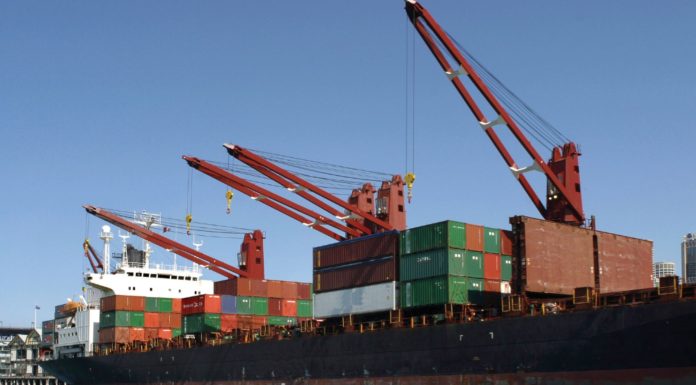
He added, “Darwin offers deep symbolism for these kinds of dialogues. The presence of US rotational forces symbolises the strategic importance of Darwin’s geography. The INPEX LNG ships that leave Darwin Harbour symbolise Northern Australia’s economic importance to Japan in providing energy resilience.”
The State Government recently released the Critical Minerals in the Northern Territory handbook, highlighting the Territory’s existing list of 15 critical minerals and the geological potential for an additional 13 emerging critical minerals.
For the December 2022 quarter, mineral exploration expenditure in the State was reported to be $56 million, an increase of 25% over the same period in 2021.
Critical minerals projects in the State include Core Lithium‘s Finniss lithium mine, Arafura‘s Nolans Project, Tivan, which plans to process vanadium and titanium on a sustainable and globally renewable scale, and Avenira’s proposed battery cathode manufacturing plant.
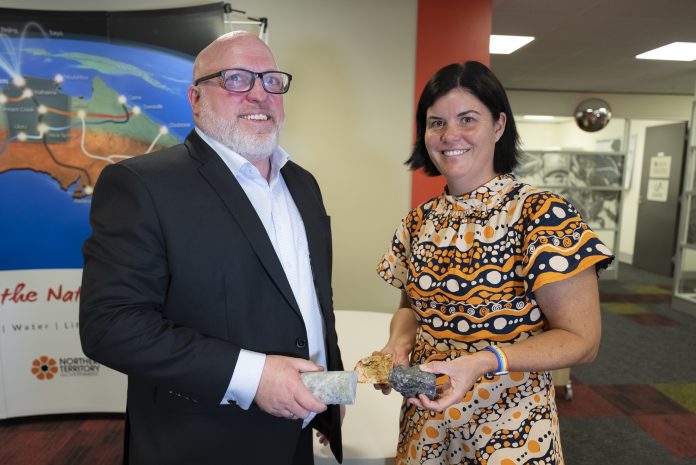
“The Northern Territory is already a global leader in manganese production, is home to the only Australian lithium producer outside of WA, and has potential to supply 5% of global demand of magnet-feed rare earths (NdPr) at the Middle Arm Sustainable Development Precinct, the Territory could also be processing Vanadium and Titanium on a sustainable basis and at a globally relevant scale,” Chief Minister Natasha Fyles said.
According to Chief Minister Fyles, the Territory is quickly establishing itself as a vital player in global supply chains for critical minerals necessary for innovative technologies and the energy transition. Chief Minister Fyles stated that the 2023 Darwin Dialogue places the Territory in the spotlight for investment.
“The need for new critical mineral mines and mineral processing is continuing to grow to support the demand for renewable energy, battery storage and high-technology industries. This presents significant economic and strategic opportunities for the Territory to become a reliable supplier of minerals to support the transition to a decarbonised economy,” Chief Minister Fyles added.
Critical minerals are utilised in producing advanced technologies such as mobile phones, computers, fibre-optic cables, semi-conductors, banknotes, and in defence, aerospace, and medical applications.