

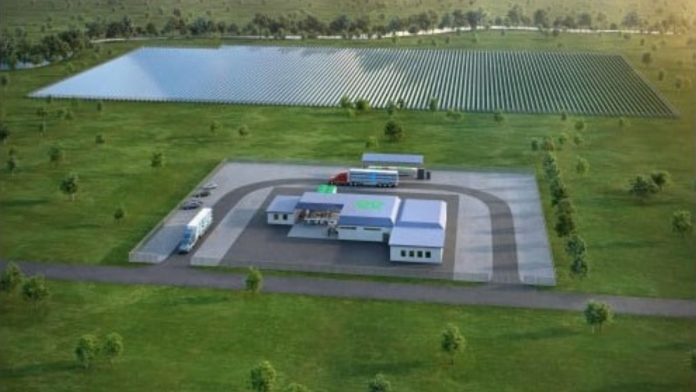
The Australian Renewable Energy Agency (ARENA) has announced conditional funding totalling up to A$50 million and €40 million for four projects as part of the German-Australian Hydrogen Innovation and Technology Incubator (HyGATE).
ARENA, on behalf of the Department of Climate Change, Energy, Environment, and Water (DCCEEW), has collaborated with Germany’s Federal Ministry of Education and Research (BMBF) via Project Management Jülich (PtJ) to run HyGATE.
Australia and Germany have each pledged up to A$50 million and €50 million to the HyGATE program, which will launch in March 2022. HyGATE aims to promote Australian-German collaboration on lowering the cost of producing hydrogen from renewable sources while stimulating innovation in both countries.
ARENA and PtJ have made conditional financing offers to the following projects:
- Edify Energy will receive $20.74 million to develop, build, and operate the Edify Green Hydrogen Project in Townsville, Queensland, in collaboration with Siemens Energy Global;
- Vast Solar was awarded $19.48 million to collaborate with Fichtner on developing a methanol production plant using renewable energy. In Port Augusta, South Australia, a 10 MW electrolyser produces green hydrogen for solar methanol manufacturing;
- Hysata was awarded $8.98 million to collaborate with Fraunhofer IPT on the development of a new ‘capillary-fed’ electrolyser to deliver low-cost hydrogen at Port Kembla, New South Wales; and
- Atco Australia has been awarded $800,000 for a feasibility study on installing an electrolyser and ammonia facility to improve hydrogen technologies and storage in the Illawarra region of New South Wales. This study is being done in collaboration with Fraunhofer IST and Fraunhofer IEG.
HyGATE brings together Australian and German industry and research partners to develop innovative hydrogen initiatives, with the majority of the work taking place in Australia.
According to ARENA, organisations that have received financing through ARENA and PtJ have been chosen based on their capacity to meet one or more of the funding round’s defined outcomes, including:
- using very advanced technology to demonstrate the value chain of renewable hydrogen;
- lowering the cost of hydrogen production, transportation, storage, and usage, as well as promoting renewable hydrogen’s commercial feasibility;
- creating a renewable hydrogen supply chain in Australia and Germany;
- encourage cross-national collaboration and knowledge sharing among Australian and German organisations; and
- price discovery and transparency regarding renewable hydrogen technology’s present and future economics.
The Australia-Germany Hydrogen Accord, launched in June 2021, draws on the two countries’ unique capabilities. Australia has the potential to be a world leader in clean hydrogen production and export, and Germany has expertise in hydrogen technology and plans to import considerable amounts of hydrogen in the future.
According to ARENA CEO Darren Miller, the HyGATE Initiative is an excellent next step in commercialising renewable hydrogen.
“We’re excited to be able to announce these four hydrogen projects that demonstrate the benefit of global collaboration to achieve a new export industry in renewable hydrogen and push us further towards the goal of net zero emissions,” Miller said.
Miller stated that hyGATE exemplifies Australia’s close ties with Germany. Miller added that the collaboration would bring together Australian ingenuity and cutting-edge German renewable hydrogen technology for the benefit of both countries.
Minister for Climate Change and Energy Chris Bowen MP said collaboration with Germany would aid in expanding Australia’s hydrogen export market and promote our country’s goal of becoming a renewable energy superpower.
“These projects demonstrate Australia’s role as a world leader in renewable energy production, reducing the cost of hydrogen production and paving the way for exports,” Minister Bowen stated.
German Federal Research Minister Bettina Stark-Watzinger commented, “Australia and Germany have a lot in common, even though more than 14,000 kilometres separate us. We share values, we share goals, we share visions. And soon we will move even closer together: with the first supply chain for green hydrogen worldwide. We have selected four projects from a joint funding call that will massively accelerate the build-up. Green hydrogen is the missing piece of the energy transition puzzle. Only with green hydrogen will we achieve our climate goals and at the same time give our economy a boost. We will have to import it permanently, as we have done it in the past with other energy sources. Australia is the ideal partner for this. With our joint initiatives HySupply and HyGATE, we laid the foundation for a long-term German-Australian hydrogen partnership early on. My goal is that the first delivery will arrive in Germany by 2030 at the latest. Today we are a big step closer to implementing a hydrogen supply chain from Australia to Germany.”





 has announced conditional funding totalling up to A$50 million and €40 million for four projects as part of the German-Australian Hydrogen Innovation and Technology Incubator (HyGATE).)