
Edith Cowan University (ECU) is collaborating with Tianqi Lithium Energy Australia (TLEA) and chemical engineering researchers to drive greener Australian lithium products.
The three-way partnership, led by ECU’s Professor of Chemical Engineering Hongqi Sun, is aimed at maximising the utilisation of Australia’s restricted lithium resources, which are expected to account for more than 55% of the annual world lithium supply in 2021.
According to ECU, lithium hydroxide is a crucial chemical enabling the decarbonisation of the transportation and energy sectors by powering battery electric vehicles and energy storage devices.
Professor Sun is an Australian representative to the United States on Hydrogen Research Partnership and is among the top 0.1% of researchers cited globally.
“This partnership on lithium with TLEA is another big leap forward for Australia’s renewable energies future, and together we are excited to deliver research outcomes in years to come,” Professor Sun said.
Recent ABS figures show that lithium exports are already playing a substantial role in keeping Australia’s run of strong trade surpluses going.
According to experts, Australia will continue to play an essential role in supplying lithium to the world market in the following years.
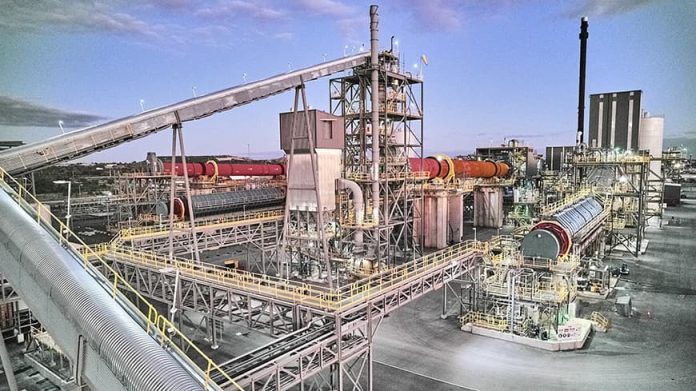
TLEA’s Kwinana plant generated Australia’s first battery-grade lithium in May 2022. The lithium hydroxide monohydrate (LHM) produced is favoured by battery makers such as Tesla, and the Kwinana refinery now has the capacity to generate 24,000 tonnes of LHM per year per production ‘train’. The WA factory now operates one production line, or ‘train,’ with a second partially finished and the ability to grow to four trains.
“By producing materials from our lithium resources with beneficial uses, we can significantly reduce our carbon footprint and contribute to Australia’s decarbonisation efforts as well as those of our off-take customers,” CEO Raj Surendran said.
Surendran stated that the company is thrilled to be a part of the partnership and to be able to use ECU’s research expertise to examine how the characteristics of aluminosilicate might be improved to expand existing market uses.
The Kwinana Plant was developed to produce by-products that will maximise the value of the spodumene ore concentrate (residue left after lithium extraction) obtained from the Talison Lithium Mine, which contains the largest and highest-grade hard rock lithium deposit in the world.
In addition to lithium, the plant also produces Gyplime, Sodium Sulphate, and a low-sulphur aluminosilicate, which are used in the production of paste fill, retaining walls, and concrete as supplementary cementitious materials (a new substance that can be used in place of some cement to produce concrete with lower CO2 levels).
Professor Sun stated that ECU and TLEA have similar environmental goals and are working together to expedite the future of cleaner lithium goods.
“Lithium is a strategic resource for the whole planet, and the key to future energy sustainability,” Professor Sun said.
The Professor added that this is about taking responsibility for making energy green, highlighting the need to make the manufacturing process greener.