

A new Deloitte Access Economics report, commissioned by the Northern Territory (NT) Government, revealed that four key industries have considerable development potential and might help the State’s economy achieve a $40 billion economy by 2030-31.
The four key industries, maritime, agriculture, minerals, and oil and gas, were also found to contribute $7 billion in direct value and support more than 11,000 jobs in the State. The Government said the industries have significant growth potential over the next decade.
Minister for Mining and Industry Nicole Manison stated that to achieve a $40 billion economy by 2030, NT must pursue daring new economic opportunities while resolving long-standing constraints.
“The Northern Territory has what it takes to be a thriving economy with world-class mineral deposits, prospective gas reserves, a strong agriculture sector, emerging information technology capabilities and strategic advantages as a location for trade and defence,” Minister Manison said.
Minister Manison added that the NT Government is committed to building a more varied and sustainable economy, resulting in better jobs and outcomes for all Territorians.
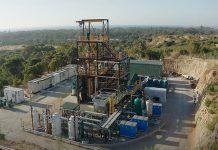
According to the Government, production from the new Finniss Lithium Project will boost the State’s minerals industry.
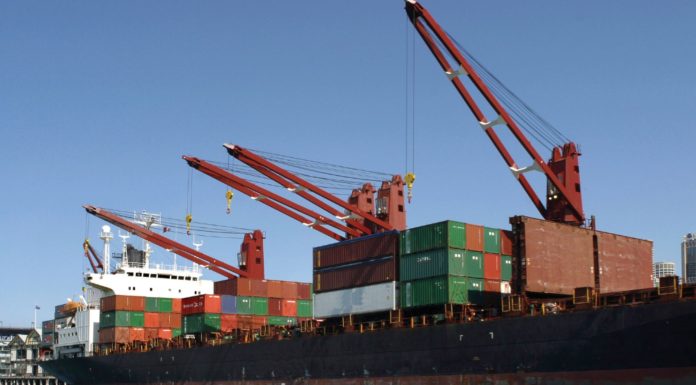
The maritime industry is poised to profit from overall economic growth and trade demand.
Meanwhile, the State Government stated that the agribusiness industry would continue to benefit from Australia’s general population growth and food consumption.
“Approximately half of the estimated growth in the NT economy could be contributed through sectoral spillovers—efficiency gains in the upstream and downstream industries dependent upon the maritime, agribusiness, minerals and oil and gas industries,” Deloitte Access Economics partner and principal report author John O’Mahony said.
O’Mahony added that the State Government could potentially deliver long-term prosperity and spread the resulting social benefits more broadly by capitalising on downstream manufacturing and service opportunities from expanding maritime, agribusiness, minerals, and oil and gas services.
There are 22 priority actions suggested to maximise industry growth between 2030-31. They include:
- Capitalising on rising demand for critical minerals by boosting exploration and production activities
- Expanding the value chain to offer economic growth and additional jobs to the Territory by developing a gas-based processing and manufacturing sector using local gas output
- Establishing Darwin as a major maintenance hub with purpose-built facilities for ships sailing in the Indo-Pacific region
- Enhancing cattle sector productivity through the use of modern technology and better land management practises
“This report can facilitate discussions between industry and the NT Government to identify potential opportunities and options to overcome barriers to growth across a number of key sectors that are important to the Territory’s economy, and support the government’s goal of a $40 billion economy by 2030,” Gaurav Sareen, Lead Partner, NT Government and Public Sector said.
The report also offers government approaches to assist industry in overcoming growth challenges such as skill shortages, access to land and water, a lack of regional connectivity, market maturity, climate change, and red tape.
According to the State Government, work is underway with industry to collaborate on suggested actions and strategies to maximise growth from 2030-31.
The Territory Economic Reconstruction Commission established the goal of developing a $40 billion economy and selected maritime, agribusiness, minerals, and oil and gas industries as having the greatest growth potential for the Territory in its Final Report.