
Renascor Resources Limited is approaching the completion of an updated and extended Battery Anode Material Study (BAM Study) for its proposed vertically integrated graphite mining and manufacturing operations in South Australia.
Renascor anticipates that the BAM Study will be completed in July 2023, pending the fulfilment of updated cost projections.
“Our technical team is making excellent progress on our updated, optimised Battery Anode Material Study which seeks to increase our projected PSG production capacity to meet the growing demand for graphite in lithium-ion batteries,” Renascor Managing Director David Christensen said.
Christensen added that the engineering work on the upstream mining and processing facilities is complete, allowing the business to start long-lead item procurement and move to front-end engineering and design.
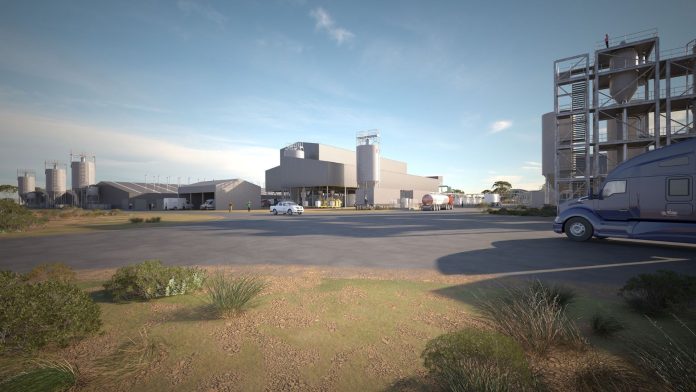
The BAM Study is evaluating a vertically integrated South Australian operation that will combine the Siviour Graphite Deposit in South Australia, the largest reported graphite reserve outside of Africa, and a state-of-the-art processing facility in South Australia to manufacture Purified Spherical Graphite (PSG) using Renascor’s eco-friendly purification process.
The BAM Study, which extends on existing feasibility studies for both upstream and downstream operations, involves boosting PSG production capacity to 28,000 tpa and phased expansions to meet forecasted demand.
Completed work programs and cost estimates are needed to release the simplified BAM Study. Despite capital cost inflation, Renascor anticipates the BAM project to provide significant returns and support a favourable final investment decision later this year.
The BAM Study’s upstream component is based on a November 2019 definitive feasibility study (DFS) (the 2019 Upstream DFS) and incorporates design improvements and other modifications from subsequent work programs like large-scale commercial pilot trials, variability test work, and value engineering studies.
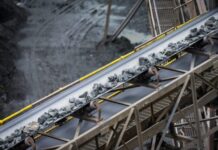
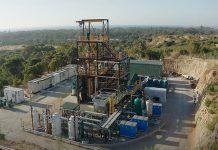
In a typical graphite flowsheet, the BAM Study’s upstream Concentrator process design maximises graphite recovery and grade via froth flotation. The mine’s ore will be crushed in stages, ground, floated, filtered, and dried before being transferred to the downstream facility.
Renascor improved its regrind and cleaning circuits to eliminate gangue and finer material to generate battery-grade feedstock that meets client standards.
Support 2019 Upstream DFS infrastructure upgrades after design and engineering studies. These include better technical designs for desalination project infrastructure, more detailed geological analyses from early 2023, and on-site solar power.
The revised BAM Study’s upstream Mine and Concentrator engineering deliverables are complete. Technical documentation permits detailed design, early procurement, and completion of the planned construction timeline.
The BAM Study will accelerate upstream Mine and Concentrator operations when the Program for Environment Protection and Rehabilitation is approved.
Renascor is acquiring long-lead-time goods and tendering for Mine and Concentrator front-end engineering design to meet this expedited upstream development timeframe.
The downstream component of the BAM Study is based on a February 2019 Prefeasibility Study (PFS) (the 2019 Downstream PFS) and examines increasing PSG production capacity by scaling up the milling and purifying circuits. The BAM Study is based on Renascor’s acquisition of SA Water’s Bolivar location last year.
To produce lithium-ion battery-quality PSG, the downstream facility uses a typical milling process to micronise and spheronise graphite, followed by a purification circuit without hydrofluoric (HF) acid.
The 2019 Downstream PFS also includes extensive infrastructure and construction planning for the Bolivar, South Australia, downstream location. Electricity, gas, and water will be supplied by local networks and SA Water’s neighbouring waste treatment facility, which recycles wastewater.
This month, downstream engineering deliverables based on the improved process design were received. Work continues on the water treatment system and energy supply infrastructure.
After completing the remaining work programs and cost estimations, the optimal BAM Study should be finished in July. Renascor expects the BAM project to continue to generate strong returns and support a favourable final investment decision later this year, despite inflationary pressures on capital costs.