
The CSIRO has released a new research on the possible impact of coal seam gas (CSG) activity in Queensland on human health.
A 2,150 square-kilometre research location in Queensland’s Surat Basin was chosen, and possible risks such as chemicals, air pollutants, noise, light, and dust connected with CSG activities were identified and assessed. Existing data on these factors were evaluated to see whether any of them needed further investigation.
While the study indicated that there was no logical pathway for the bulk of the identified factors to affect human health, it determined that a further in-depth review of a limited number of identified factors was necessary.
As a result, two new CSIRO research projects are already underway, intending to conduct more in-depth examinations of eight sets of chemical variables.
The research, conducted by CSIRO and the University of Queensland, was overseen by the CSIRO’s Gas Industry Social and Environmental Research Alliance (GISERA). CSIRO leads GISERA, a partnership of CSIRO, Commonwealth, state, and territory governments, and industry to research gas development’s environmental and socio-economic impacts on the community.
The study was largely financed by the Queensland Government (59%) and Federal Government (21%), as well as the CSIRO (18%). GISERA industry partners APLNG and QGC each contributed 1% of the budget and made operational data accessible.
CSIRO Energy Resources Research Director and GISERA Director Dr Damian Barrett stated that the study provided forensic evidence regarding the possible dangers to human health from CSG activities in the Surat Basin.
“The value of this exhaustive study is that it provides certainty about where we need to focus further research,” Dr Barrett said.
According to Dr Barrett, by excluding factors of no significance, we ensure that research resources are used efficiently and effectively to hone in on chemical factors with a potential influence on human health.
“CSIRO is already taking the next steps to look more closely at these eight groups of chemical factors where a potential pathway can’t be ruled out or more information is needed,” Dr Barrett added.
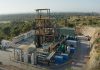
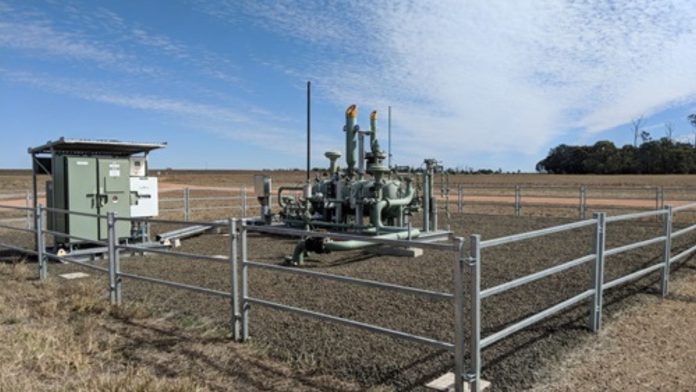
The research analysed all activities related to coal seam gas extraction over a 2,150 square kilometre area in the Miles, Chinchilla, and Condamine regions. The research area’s CSG infrastructure included approximately 2,400 wells, 5,000 km of collection lines, four water treatment plants, eight gas processing plants, and 15 compression stations.
The university’s Queensland Alliance for Environmental Health Science (QAEHS) assessed industry chemical components, while CSIRO assessed air emissions and physical elements (noise, light, and dust).
Origin, Australia Pacific LNG‘s upstream operator, and QGC, Shell’s operator, provided activity statistics. Researchers used Queensland Government data. This data included drilling and workover activities for 2,424 wells, hydraulic fracturing data for 67 study area wells, water treatment, gas processing, and flaring operations.
CSIRO’s GISERA health project framework closely followed the enHealth Health Impact Assessment technique to build the health research.