

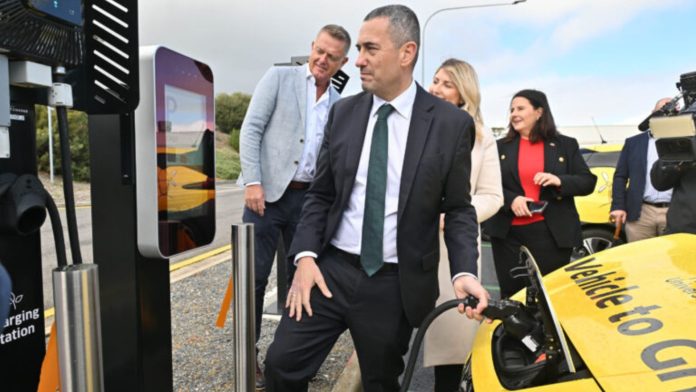
A new electric vehicle (EV) charging station featuring vehicle-to-grid technology has been launched at Flinders University.
The South Australian Government-funded initiative highlights a partnership between ENGIE and Flinders University, bringing 10 Vehicle-to-Grid (V2G) chargers online.
The V2G charging bays can charge and discharge electricity to the campus’ electricity grid, creating a virtual power plant (VPP) to benefit the University’s fleet, staff, and students.
According to the University, the project illustrates how EVs may be used to help South Australia’s electricity system during peak periods.
Regular DC and AC chargers are already accessible at the University for individuals who have made the move to clean, sustainable EVs, with the complete network distributing the University’s solar and wind-sourced energy.
As part of the new VPP built by ENGIE for the trial, the V2G bays will be utilised to feed renewable energy from compatible EVs back into the campus grid.
The initiative just earned Flinders University the Sustainable Development Goals Initiative of the Year Award at the Triple E Awards in Barcelona.
The project is one of several projects funded under the State Government’s $3.2 million Smart Changing Trials program. The trial data will shape and influence the future path of EVs in South Australia as the State for net zero emissions by 2050.
The trials will supplement South Australia’s statewide EV charging network, providing over 500 charging bays to 140 sites in 52 locations.
Minister for Infrastructure and Transport Tom Koutsantonis MP said South Australian ingenuity has again claimed its place on the international stage, with this award-winning smart charging trial.
“We are delighted to see this bold trial at Flinders hit its first key milestone, charging electric vehicles and feeding power back into the grid when needed, demonstrating how EVs can be harnessed to support SA’s electricity system during peak demand periods,” Minister Koutsantonis stated.
“More and more electric vehicles will be hitting our roads in years to come as we travel towards net zero emissions. With trials like this investigating the possibilities for broad use of this technology we can be confident we are on the right track,” the Minister added.
Flinders University Vice-Chancellor Professor Colin Stirling said Flinders University is investing in EV fleet and infrastructure, including bidirectional smart chargers for peak demand storage at Bedford Park campus, as part of its mission to be climate positive and reduce greenhouse gas emissions.
“Flinders runs on 100 per cent renewable energy, including 20 per cent generated right here on campus through our massive solar arrays. Thanks to the South Australian Government’s Electric Vehicle Smart Charging Trial we’re taking another big step towards sustainability,” Vice-Chancellor Professor Stirling stated.
According to ENGIE ANZ CEO Rik De Buyserie, this program not only helps Flinders University meet its sustainability goals but also signifies a significant increase in demand and increased knowledge of the long-term benefits of moving to an EV fleet.
“The integration of renewable energy, EV charging and demand management systems better matches renewable output to a site’s demand, reduces emissions and puts downward pressure on electricity prices,” Buyserie said.