
A University of Southern Queensland (UniSQ) researcher has been awarded a $1 million grant from the Australian Research Council (ARC) Future Fellowships to create a new generation of high-performance thermoelectric energy harvesting technologies.
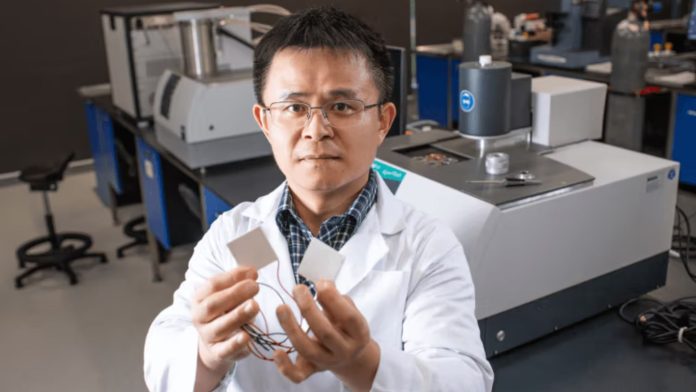
As the globe grapples with the consequences of climate change, materials scientist Associate Professor Min Hong seeks to address the problem with cutting-edge waste-heat-to-power technology.
According to Associate Professor Hong, thermoelectric materials are a possible alternative for lowering fossil fuel usage and preventing a global energy crisis.
“One of the most significant aspects of thermoelectric technology is its ability to capture waste heat from industrial processes, power plants and other sources that would otherwise be lost,” he said.
He explained that thermoelectric systems can enhance overall energy efficiency and minimise fossil fuel usage by converting waste heat into electricity.
“More than 60 per cent of global primary energy consumption is wasted. Therefore, there is a compelling need to develop new thermoelectric materials to recover waste heat,” he added.
While thermoelectric technology offers several benefits, including zero emissions, no moving parts, accurate temperature control, a lengthy steady-state operation time, and the ability to operate under challenging conditions, it is not without flaws.
UniSQ noted that thermoelectric materials are often expensive and brittle, and other issues include conversion efficiency, heat exchange, and thermal management.
The thermoelectric market is expected to be worth US$1,443 million by 2030. Associate Professor Hong’s research aims to improve thermoelectric materials’ performance so that sustainable energy conversion technology can attain its full potential.
“The unique feature of direct conversion between heat and electricity has led to increasing applications in various industries, including energy harvesting and waste heat recovery, powering the portable and wearable devices, remote patient monitoring and implantable sensors, long-lasting power for space exploration and efficient solid-sate cooling,” Associate Professor Hong said.
“I aim to make the technology more functional, robust and affordable by establishing new strategies for enhancing thermoelectric properties, creating mass-production synthesis to reduce the materials cost and exploring computation methods to guide the device assembly,” he stated.
The ARC’s Future Fellowships initiative provides funding for four years to outstanding mid-career academics to conduct high-quality research in areas of national and international benefit.