
As Australia faces a $60 billion opportunity, the Maritime Union of Australia (MUA) and Macquarie University’s Centre for Energy and Natural Resources Innovation and Transformation have launched a report calling for a significant change in government policy and regulation regarding the decommissioning, processing, recycling, and disposal of offshore oil and gas infrastructure.
For years, the MUA has advocated for the decommissioning, removal, and recycling of offshore oil and gas infrastructure, alongside investment in offshore renewable energy projects, along the Australian coastline.
“Australian maritime workers built and maintained our offshore oil and gas industry throughout the latter decades of the 20th Century, and with our eyes set firmly on the need to decarbonise our economy and diversify our renewable energy supplies the MUA is advocating for a sustainable and clean withdrawal from offshore oil and gas that includes the comprehensive removal and recycling of the massive volume of disused offshore equipment,” MUA Assistant National Secretary Adrian Evans said.
The report focuses on dismantling, processing, recycling, and disposal of offshore oil and gas infrastructure and outlines the necessary steps after structures are removed and ashore.
“High standards onshore are essential to achieving excellent safety, economic and environmental outcomes offshore,” report author Professor Tina Soliman-Hunter explained.
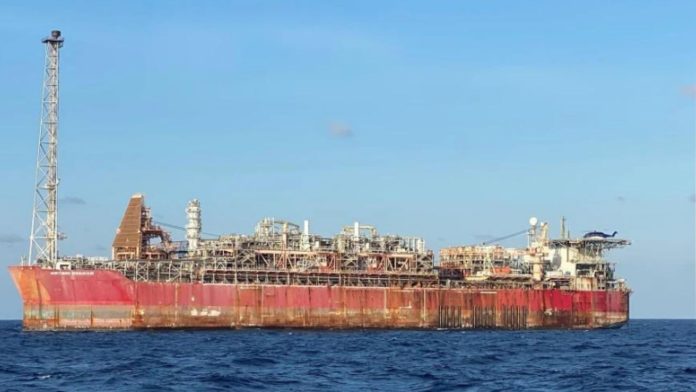
According to MUA, because offshore oil and gas installations are often beyond the horizon and thus invisible to the community, many oil and gas companies with offshore projects nearing the end of their lives have spent many years attempting to avoid their legal and ethical obligation to safely, cleanly, and thoroughly remove their underwater and floating equipment, including well-heads, pipelines, and riser turret moorings (RTMs).
“Every year we catch major oil and gas companies trying to abandon their offshore, underwater and floating infrastructure, often after deliberately ignoring routine maintenance tasks so that it becomes uneconomical or unsafe to properly remove them,” Evans stated.
The MUA and the Centre for Energy and Natural Resources Innovation and Transformation have reviewed Australia’s legal obligations and domestic law regarding offshore oil and gas infrastructure dismantling, processing, recycling, and disposal. They identified gaps in the existing legal framework, analysed best practices in mature jurisdictions, and provided recommendations for effective government policy development.
“Offshore energy projects have provided generations of members with rewarding and fulfilling work building and maintaining the infrastructure that powers our economy. That’s not going to change with the shift to offshore renewable projects, and as older oil and gas projects wind down and come offline we have a collective obligation to remove and dispose of these installations thoroughly and sustainably,” MUA Assistant National Secretary Mich-Elle Myers said.