

The Australian Workers’ Union (AWU) has put its support behind Australia’s booming hydrogen sector with the release of a new McKell Institute report, which claims Australia has the potential to be a global hydrogen powerhouse if the nation acts quickly.
The report’s publication follows the passage of a resolution of the AWU National Conference calling on the Australian Government to reject a narrow green-focused hydrogen agenda and instead prioritise the scaling-up of hydrogen this decade to maximise the opportunity for the hydrogen export economy.
While renewable power may meet many industrial energy requirements, others, such as the production of steel, glass, concrete, fertiliser, ammonia, polymers, and other vital industrial products require the use of fuel or gas as a feedstock.
For decades, hydrogen has been generated as a chemical component for industry, and the focus has recently shifted to its usage as an emissions-free fuel.
According to the McKell Institute report, First Mover Moment, green hydrogen – which creates hydrogen from water via electrolysis – provides a significant export possibility for Australia. However, green hydrogen will not be generated on a large scale in Australia until “well into the 2030s”.
In a statement, AWU said Australia must implement its plan for a future green hydrogen export economy into action to capitalise on this potential. This can be strengthened by promoting the timely development of the associated infrastructure, networks, and customer bases required for the export economy. By developing scale, maximising hydrogen production, and ultimately reducing costs this decade, Australia can meet the moment and become the first mover in global markets for hydrogen and the range of green manufactured goods it can produce.
According to AWU National Secretary Daniel Walton, while green hydrogen is the future, Australia cannot afford to wait until it can be generated on a large enough scale to establish the framework for a local and export sector.
“There’s nothing wrong with green hydrogen, but it’s also many, many years off being economic. We need to move much faster. It will be very easy to transition to green hydrogen when the time is right, but let’s not sit around waiting on a promise while our industries perish around us,” Walton said.
Most hydrogen is produced from coal or natural gas using a process known as steam methane reforming, but burning these fuels emits carbon dioxide. Two new processes have emerged to cut carbon emissions: blue hydrogen, which uses carbon capture and storage to prevent carbon emissions from leaking into the atmosphere, and green hydrogen, which uses renewable energy to divide water molecules into hydrogen and oxygen.
While both methods are feasible, blue hydrogen generation may be combined with existing hydrogen production technology and integrated into the mature and well-established supply chains of coal, oil, and gas.
Several green hydrogen projects are in the works, including a pledge by the South Australian Labor Government to develop a 250MW electrolyser and a 200MW hydrogen-fuelled power station near Whyalla. Simultaneously, several blue hydrogen projects are already underway.
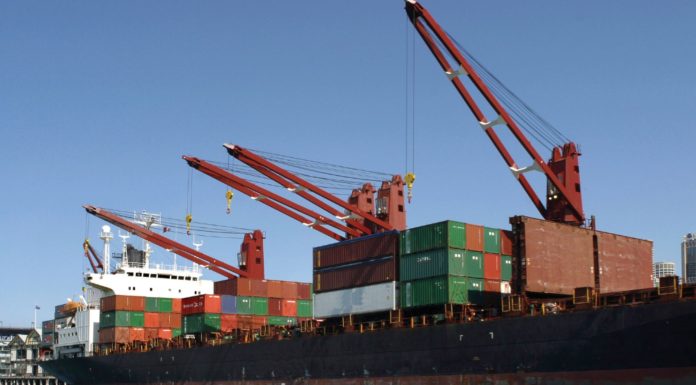
Walton said it was critical for Australia to grab the opportunity to base much of the international hydrogen supper chain in the country, creating thousands of skilled jobs in the process.
“An export industry will require substantial new plant, equipment, infrastructure, and skilled workers. AWU members already have enormous experience of dealing with oil and gas extraction, pipelines, and fuel refining, and as a result will be at the heart of this hydrogen revolution,” he stated.