
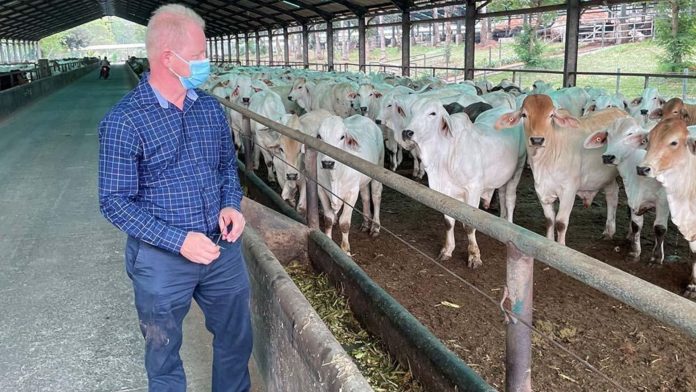
The Australian Government has launched a new $1.4 million capacity-building initiative in Indonesia, bringing Australian expertise to the battle against foot-and-mouth disease (FMD) and lumpy skin disease (LSD).
In June 2023, a departmental veterinary officer will be sent to the United Nations Food and Agriculture Organization (FAO) office in Indonesia to serve as a liaison between Indonesian and Australian specialists.
According to the Federal Government, the initiative is an essential step towards integrating Indonesian, international, and Australian efforts in a long-term response effort.
Australia’s Chief Veterinary Officer Dr Mark Schipp stated that the FAO will deliver the project in collaboration with the Indonesian Ministry of Agriculture (MOA), operating out of the MOA headquarters in Jakarta.
“LSD and FMD present the most significant threats to Australia’s biosecurity integrity in decades. Providing on-ground technical support in Indonesia will help to mitigate the risks of the disease spreading in the region,” Dr Schipp said.
Dr Schipp explained that this project will increase Indonesia’s ability to detect, control, and prevent FMD and LSD, as well as strengthen national and local governments’ capability to stop the spread of these illnesses.
He added that it will also enable livestock farmers and stakeholders to utilise best practises for FMD and LSD prevention and control, as well as increase communication between the Indonesian government and farmers.
“Australia remains free from both FMD and LSD. But it is critical we continue to support our close neighbours to prevent or respond effectively to these diseases which can have a devastating effect on their food security and economic wellbeing. Helping our close neighbours in this way also has a flow-on protective effect to Australia and other countries in our region. Our strong partnerships with countries such as Indonesia, Papua New Guinea and Timor-Leste is providing an opportunity for us to work together on issues of regional concern and also helps to safeguard our respective agriculture sectors and the industries on which they rely,” Dr Schipp said.
According to Dr Schipp, this is just another way Australia is trying to ensure its biosecurity system protects the prosperity of Australian farmers, producers, and rural communities.
The initiative, funded by the Department of Foreign Affairs and Trade, is a component of the $10 million biosecurity assistance package for Indonesia that Minister Murray Watt and the Minister for Foreign Affairs jointly announced in August 2022.
To safeguard Australia from exotic illnesses, the Australian Government has committed to investing in new, long-term biosecurity investments.
With the funding, more frontline biosecurity officers have been hired, four million doses of FMD vaccinations have been donated to Indonesia, detection canines have been redeployed to northern airports, and sanitation foot mats have been installed at all international airports with flights from Indonesia.