
The University of Newcastle has partnered with ASCON Group in a $6 million research to commercialise a carbon capture technology with the potential to help heavy industries achieve net zero emissions by 2030.
The partnership is part of the Trailblazer for Recycling and Clean Energy (TRaCE) program, run by the University of Newcastle and UNSW Sydney. The TRaCE program aims to accelerate the commercialisation of recycling and clean energy innovations while supporting national decarbonisation and manufacturing agendas.
ASCON Group, a Hamburg-based oil and commodities trading firm, has partnered with Laureate Professor Behdad Moghtaderi from the University of Newcastle to undertake a project titled “Achieving Negative Emissions in the Production of Green Steel and Green Chemicals Using the Versatile Advanced Methods of Cleaning Offtake Gases (VAMCO) Family of Gas Separation Technologies.”
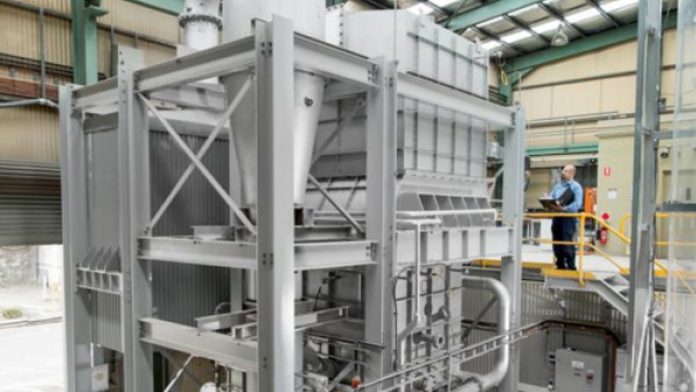
VAMCO is a carbon capture technology that, according to Laureate Professor Moghtaderi, will assist heavy industries in capturing carbon emissions while producing green steel, hydrogen, and ammonia. VAMCO technology was initially developed for point-source capture of fugitive emissions from coal mines, but it now has the potential to be used in a variety of industries, including coal-fired power plants, steel plants, and others.
“The vision underpinning this project is to help drive and accelerate national capabilities in new/emerging CO2 capture technologies which are widely recognised as one of the key pillars of decarbonisation,” Laureate Professor Moghtaderi said.
“This could potentially provide an effective short to medium-term (2030-2050) pathway for lowering global GHG emissions. Importantly, such systems are expected to remove CO2 at an indicative cost of about A$50 per tonne as opposed to current costs which vary between A$100/tCO2 and A$300/tCO2 depending on the type of capture technology employed,” the Professor added.
ASCON Group Decarbonisation and Green Innovation Business Director Nate Macmillan stated that the start of the VAMCO research contract demonstrates the company’s commitment to reducing greenhouse gas emissions.
“Carbon capture technologies can greatly contribute to the fossil fuel industry reaching Net Zero by 2030, unlocking blue hydrogen capacity and potential,” Macmillan said.
Because of the use of a proprietary CO2 adsorbent created by University of Newcastle researchers, the ASCON VAMCO unit offers a lower-cost and more environmentally friendly alternative to other carbon capture technologies on the market.
Macmillan said ASCON and the University will construct three pilot-scale facilities in 2026 to test VAMCO technology before launching the units in the market, with one at the planned ASCON Bioenergy with Carbon Capture with Storage (BECCS) technology based Poly-Generation of Sustainable Chemicals and Fuels (POSCAF) site in Scotland.
“These units have the potential to revolutionise the way industries utilising fossil fuels operate, allowing the capture of carbon directly from the source and recycling of the captured carbon into useful products,” he added.
According to University of Newcastle Pro Vice-Chancellor Industry and Engagement Warwick Dawson, the partnership marks a significant milestone in the University’s commitment to improving renewable energy and emissions reduction technologies through innovative research.
“We believe this research, combined with the other TRaCE projects and initiatives, will create a step-change in the world’s transition to net zero through the implementation of renewable energy technologies,” Dawson said.