
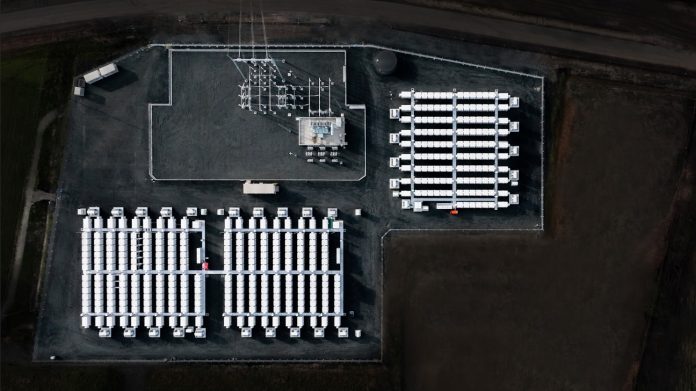
The new Hazelwood Battery Energy Storage System (HBESS) is set to provide an additional 150 megawatts of energy storage capacity to Victoria’s energy system.
According to the Victorian Government, HBESS represents a significant step forward in the site’s transformation from a former coal-fired power plant to an active player in Victoria’s renewable energy future.
Minister for Energy and Resources Lily D’Ambrosio unveiled the HBESS, a collaboration between ENGIE, Eku Energy, and Fluence. During the evening peak, the Hazelwood battery can power about 75,000 Victorian households for one hour.
“We’re leading the nation in our investment in battery and energy storage projects, from the biggest of big batteries to the smallest household units, which will all help us deliver more secure, affordable renewable energy,” Minister D’Ambrosio said.
“Our nation-leading energy storage targets are ensuring that Victoria continues to attract industry investment and collaboration opportunities like this,” Minister D’Ambrosio added.
The State Government stated that projects like this one are critical to meeting Victoria’s energy storage objectives of at least 2.6 gigawatts of storage capacity by 2030 and at least 6.3 gigawatts by 2035 as the State strives for 95% renewable energy by 2035.
The largest utility-scale batteries in Australia are already located in Victoria, according to the Government, including the 300-megawatt Victorian Big Battery, which is the biggest lithium-ion battery in the whole southern hemisphere.
Big batteries in the pipeline include:
- a grid-forming 100-megawatt battery at Terang, supported by the Energy Innovation Fund
- a $119 million grid-forming lithium-ion big battery of 125 megawatts, supported by the Renewable Energy Zone Fund
- Four batteries totalling 365 megawatts as part of the Victorian Renewable Energy Target (VRET2) auction.
Additionally, the Victorian Budget 2023/24 is investing $42.2 million in installing 100 new neighbourhood batteries in strategic areas around Victoria, increasing the number of houses with access to a battery and providing critical extra storage capacity for local communities.
The Solar Homes Program has now assisted over 13,800 Victorian families in installing their batteries to leverage the benefits of rooftop solar.
To meet the State Government’s ambitious emissions reduction target of net zero by 2045, Victoria is increasing its energy storage capacity, establishing Australia’s first offshore wind energy industry in Gippsland, and investing an initial $1 billion in the State Electricity Commission (SEC) to deliver 4.5 gigawatts of power.