
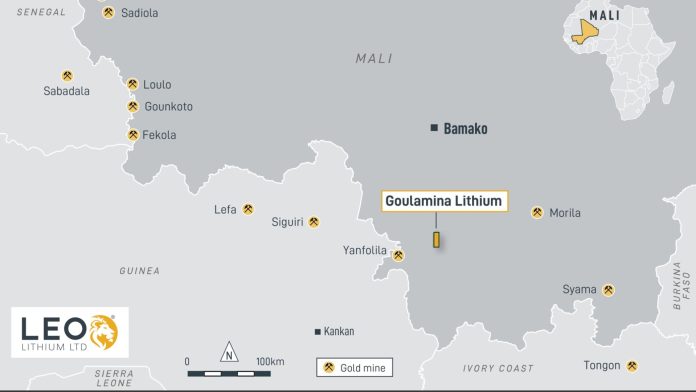
Leo Lithium Limited has announced the results of its high-grade drilling efforts at the Goulamina Lithium Project in Mali.
According to Leo Lithium, it saw high-grade, thick pegmatite intercepts within the Danaya and Northeast (NE) Domains.
The company stated that the resource drilling program aimed to increase the confidence level of the orebody and covert a significant amount of Inferred Resource into the indicated resource category.
It added that future drilling efforts would be focused on testing potential northern strike extensions.
In the NE Domain, Leo conducted a substantial reverse-circulation (RC) and diamond drilling program, with most holes planned as RC holes with HQ diamond core tails.
RC assay results have been received for 59 drill holes within the area, but results for the diamond core tails are still pending and will be released to the market once they become available.
The company said drilling intersected thick-grade spodumene pegmatite dykes, with spodumene being the only lithium-bearing mineral phase recognised.
Drilling efforts also paved the way for the discovery of new pegmatite dykes within the NE Domain.
In the Danaya Domain, diamond core results indicated excellent grades and pegmatite down-dip continuity.
The thick high-grade downhole intercepts below the current Reasonable Prospects for Eventual Economic Extraction (RPEEE) optimised resource pit shell show the down-dip potential of the domain.
Leo Managing Director Simon Hay said the new information gained from the drilling campaign would enhance the quality of Goulamina.
“The lithium oxide grades received from the combined Dayan and NE Domain targets are overall higher than the current average Mineral Resource Estimate (MRE) grades for Goulamina,” he added.
Hay stated that there is also further growth potential as the company works to test potential northern strike extensions soon.
Further drilling results are expected to be released in the coming months, while an updated MRE for the deposit is anticipated before the end of the June 2023 quarter.