

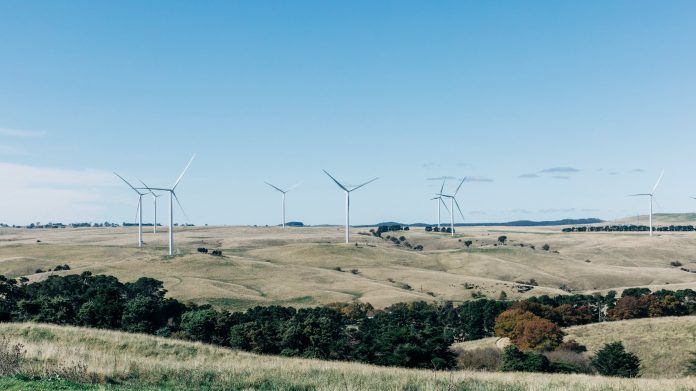
Farmers for Climate Action has produced a new paper, Farm Powered: Opportunities for Regional Communities in the Renewable Energy Boom, as the renewable energy wave sweeps over regional Australia.
The report calls that the new Commonwealth Government to back policies that benefit local farming communities while also cutting emissions.
The report’s suggestions include:
- A national strategy for combating climate change and agriculture that promotes on-farm renewable energy and subsidised batteries;
- The implementation of renewable energy incentives for farmers in order to enhance agricultural adoption and lower input costs; and
- State and federal governments must establish a method to pay farmers annual rent for transmission lines, as well as provide community benefits.
According to Farmers for Climate Action, to reach its carbon reduction targets, Australia plans to install about 135GW of renewable energy and more than 10,000km of transmission lines by 2030.
Farmers for Climate Action CEO Dr Fiona Davis said renewable energy deployment across Australia has the potential to be enormously beneficial to farmers and regional areas.
“Though critical to renewable energy’s success, current energy regulations, and policies have not sufficiently engaged nor accounted for farmers or regional communities. We need a plan to make sure farmers and farming communities can benefit from the roll-out of renewable energy at all levels; the future of Australia’s renewable energy and farms depends on it,” Dr Davis stated.
She added subsidising on-farm batteries means that local energy is used locally, decreasing grid load and saving farmers money.
The report also suggests devoting funds to build a research and knowledge-sharing programme on agrivoltaics — the integration of solar panels with agriculture — to increase farm profitability and demonstrate to communities that agriculture and energy production can coexist.
“Farmers have the space for small and large renewable energy projects paired with on-farm storage, which would become viable if there were a subsidy available. Reducing farmers’ costs can reduce the cost of food on the supermarket shelves and reduce cost of living for everyday Australians,” Dr Davis said.
Professor Ross Garnaut, principal author Karin Stark, and Davis will launch the report today.
Karin Stark’s Farm Renewables Consulting, ReAlliance and Neil Gibbs’ consultancy Online Power were commissioned to conduct the report.