
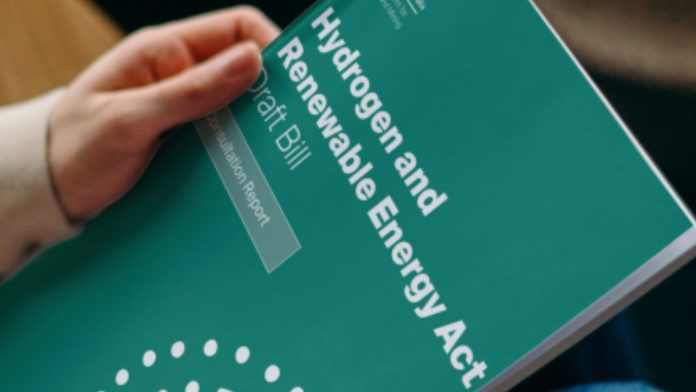
The South Australian Government has brought the Hydrogen and Renewable Energy Bill into the State Parliament to streamline and coordinate the development of hydrogen and renewable energy projects.
According to the State Government, South Australia is set to embark on a new wave of large-scale hydrogen and renewable energy development, with over $20 billion in capital development projects, despite its existing frameworks achieving over 70% renewable energy.
“We’re already capitalising on this leadership position through our Hydrogen Jobs Plan, a major investment which is only just the start,” Premier Peter Malinauskas said.
The shift in scale and complexity, as well as multiple proposed major, vertically integrated projects, necessitates a single end-to-end framework that can address the interests of the environment, landowners, communities, and the State’s strategic and economic goals.
The Hydrogen and Renewable Energy Bill consolidates six Acts to streamline investment processes and promote a competitive, government-led approach to large-scale hydrogen and renewable energy development, aligning with the Government’s Hydrogen Jobs Plan.
“Developing this unique regulatory framework will provide significant opportunity for South Australia to attract and retain high quality investment, confirming us as a global leader in the clean energy transition,” Minister Tom Koutsantonis said.
The Bill, applicable to freehold and government-owned land and state waters, aims to guarantee community and investor confidence and consistent performance in the industry’s social, environmental, and safety aspects.
Proponents of freehold land must secure land access through direct agreement with landowners to maintain current arrangements.
A new competitive method for granting access and permits for projects on pastoral land and state waters will be implemented, allowing the government to properly assign access to some of the State’s most promising regions for renewable energy development.
The declaration of release areas will be a consultative process involving government agencies, native title holders, and stakeholders, allowing for a competitive tender process for feasibility licenses over the land and waters, based on transparent selection criteria.
The State Government noted that this would ensure that the State only hosts projects willing to coexist with current land uses and provide community and environmental benefits through their projects.
“This bill will give confidence to international investors who are willing to contribute their capital to growing the industries of the future right here in South Australia,” Premier Malinauskas said.
“It will also give the community confidence that these projects will be delivered in a way which protects the environment and interests of communities, landholders, native title holders and the environment,” he added.
Five licence types will be designed to cover the essential stages of renewable energy projects, from early research and feasibility to facility construction, operation, and closure:
- Renewable Energy Feasibility Licence/Permit – Allows exploration for renewable energy, including the development of monitoring equipment.
- Renewable Energy Infrastructure Licence – Permits construction, operation, decommissioning, and rehabilitation of renewable energy infrastructure.
- Renewable Energy Research Licence – Permits the construction, operation, decommissioning, and rehabilitation of renewable energy infrastructure to examine the capabilities of a technology, system, or process.
- Hydrogen Generation Licence – Permits construction, operation, decommissioning, and rehabilitation of hydrogen generation facilities.
- Associated Infrastructure Licence – Permits ancillary infrastructure (transmission, roads, water treatment), and associated facilities (hydrogen power plants, ports for hydrogen product export, desalination for hydrogen production).
The Bill has undergone extensive consultations over the past year, including with native title holders.