
Over 100 businesses and organisations have joined forces to put one million electric vehicles on Australian roads by 2027.
In a statement, the Electric Vehicle Council said the partnership includes representatives from transportation, retail, agriculture, health, technology, insurance, the environment, and research to help the federal government draught a National Electric Vehicle Strategy.
They are calling for that strategy to:
- feature a stringent fuel economy criteria comparable to those in the United States, New Zealand, and Europe;
- a coordinated EV industry development plan to increase investment in EV manufacturing;
- assist in the implementation of a coordinated charging network with an emphasis on regions and suburbs;
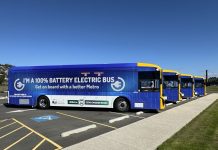
- more electric buses, lorries, and other commercial vehicles for Australian businesses are encouraged;
- produce economic modelling that takes into account the various benefits of EVs, such as reduced pollution, enhanced public health, and greater fuel security;
- set a target of one million electric vehicles on Australian roads by 2027.
Electric Vehicle Council chief executive Behyad Jafari said that after years of delay from Canberra, Australian EV policy is finally set to take off, and businesses want to ensure we don’t lose out.
“This new federal government is off to a strong start and a National EV Strategy announced in the first months of its tenure is an excellent development. But after a long period of policy stagnation, we now need a strategy that contains robust measures,” Jafari stated.
According to Jafari, it is known that Australians want the transition to electric vehicles to be as quick as possible. He added that the Electric Vehicle Council’s most recent data showed EV sales have increased by 66 per cent in the last year, but Australia still has a lot of ground to make up by catching up to the rest of the world.
“The absence of a fuel efficiency standard is largely to blame as manufacturers overlook our nation in favour of others who have more ambitious plans. We can fix that swiftly and these hundred organisations from across Australian industry and society are making it clear they want that to happen,” Jafari said.
Jafari stated that the transport should be performing its fair share of the heavy lifting on the route to net zero emissions, according to Australian business. Jafari added if Australia does not significantly reduce its transportation emissions by putting more EVs on the road, it will place an unsustainable strain on other sectors such as farming, manufacturing, construction, mining, and energy.
“If we get this EV Strategy right, the opportunities are enormous. We could be employing tens of thousands of Australians building batteries, chargers, cars, buses, and trucks. We’ll be cutting pollution from transport and doing our fair share to combat climate change. And we’ll be reducing our reliance on foreign oil by using Australian energy to move,” he added.
According to IKEA Fulfillment Sourcing Manager Brendan Groll, a comprehensive national EV plan with specific legislation for the freight and logistics sectors will allow the retail sector to accelerate its commitment to transportation emissions reductions, allowing Australians to have sustainable delivery options.
“Australia’s first National Electric Vehicle Strategy will guide the infrastructure and workforce to support the transition to a cleaner economy on one of the largest sources of national emissions. NECA fully endorses the EV Council in making this a priority,” NECA CEO Oliver Judd said.
ABB EV Charging Product Marketing Manager Steve Amor stated that as a member of the collaborative EV industry, ABB Australia fully supports and agrees to take part in the proposal to help develop an Australian EV Strategy and policy to encourage, promote, and support the electrification of Australia’s larger vehicle population, with the ultimate objective of having one million electric vehicles on Australian roads by 2027.