

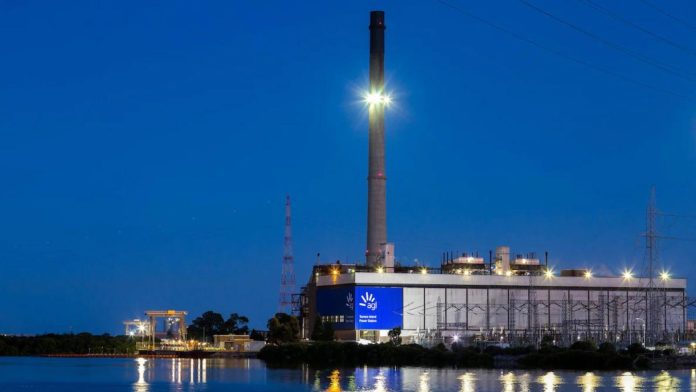
The Australian Renewable Energy Agency (ARENA) announced AGL Energy would receive $422,582 in funding on behalf of the Australian Government.
In a statement, ARENA said the funding would be allocated to researching the potential of retrofitting South Australia’s Torrens Island Power Station B with thermal energy storage technology.
The feasibility study, which cost $1.01 million in total, would look into ways to use grid electricity to charge thermal energy storage and discharge through one of the power plant’s current 200 MW steam turbines, which typically burns gas when electricity is needed on the grid.
The research will investigate the viability of repurposing existing electricity infrastructure at locations such as Torrens Island to be powered by renewable energy and energy storage.
AGL’s feasibility study will last around a year, with two selected manufacturers being investigated for the thermal solution to determine the technical and commercial feasibility of the chosen prefered option:
- Kraftblock (Germany): Using synthetic pellets made up of up to 85 per cent recycled material as the heat storage medium, operational temperatures of up to 1300°C can be achieved.
- MGA Thermal (Australia): Using unique Miscibility Gap Alloy (MGA) technology as the heat storage medium, operating temperatures of up to 760 °C are possible. MGA Blocks are designed for use in thermal energy storage systems that provide continuous high-temperature heat or electricity that is safe, low cost, and high capacity.
In its 2022 Integrated System Plan, the Australian Energy Market Operator stated that the National Electricity Market (NEM) will require more than 60 GW of dispatchable generation and storage by 2050 to sustain the uptake of renewable energy.
The most pressing utility-scale need in the coming decade is for medium-duration (4 to 12-hour) storage to control daily changes in solar and wind output to satisfy customer demand as coal power plants close.
The feasibility study findings are intended to be reproducible and scalable with additional thermal generators across the NEM, with technology providers benefiting from the information.
According to ARENA CEO Darren Miller, the study will look into the role thermal energy storage can play in increasing renewable energy production across the NEM by reusing existing power plants and energy infrastructure.
“AGL’s study comes at an important time when we need to look at all options for renewable energy storage. As thermal power stations close, there could be an opportunity to retrofit these sites as we head towards net zero emissions,” Miller said.
Miller added that given the potentially long lead times and geographic limits of other storage technologies, alternate pathways such as retrofitting existing power plants with thermal energy storage could be a viable approach to contribute to the mix and satisfy Australia’s medium-duration storage needs. He stated that it also allows more value to be extracted from infrastructures such as grid connections and transmission cables.
The thermal battery feasibility study, according to AGL Chief Operating Officer Markus Brokhof, illustrates AGL’s commitment to fast-tracking decarbonisation and investing in innovative technologies and energy solutions.
“This is one of the first feasibility studies to look at how a thermal battery could reduce costs and lower emissions for gas-fired power stations. Future studies will also look at how to replicate and scale thermal batteries, allowing them to be rolled out as an energy solution for commercial and industrial customers requiring heat,” Brokhof stated.
According to Brokhof, it made sense to evaluate the technology on Torrens Island, where plans to convert the site into an industrial energy hub are currently in the works, with the development of the 250 MW Torrens Island Battery and the adjacent 210 MW fast-start Barker Inlet Power station, both of which have been operational since 2019.







 announced AGL Energy would receive $422,582 in funding on behalf of the Australian Government.)