

University of Southern Queensland (UniSQ) researchers have joined a national partnership advancing Australia’s agriculture sector through digital technology.
The Agricultural Research Federation (AgReFed) Platform is a program that aims to increase the discoverability of reliable, reusable, and analysis-ready agri-data from throughout Australia.
The open-source platform enables users, including landholders, researchers, and industry professionals, to conduct repeatable analyses and generate novel insights across various agricultural sectors.
The initiative, led by Federation University Australia and financed by the Australian Research Data Commons (ARDC), has brought together numerous universities and industry partners to work towards a common goal: making agricultural data more findable, accessible, interoperable, and reusable (FAIR).
“AgReFed Platform is providing tools and workflows to support agricultural researchers and to change the way agriculture research is conducted across Australia,” Director Centre for eResearch and Digital Innovation (Federation Uni) Helen Thompson said.
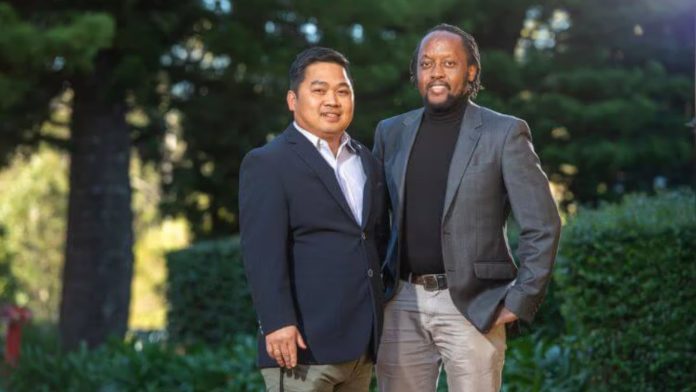
The platform was developed by a team of experts, including UniSQ Senior Digital Research Advisor Dr Francis Gacenga and Computational Agro-Economist Dr Duc-Anh An-Vo.
“Agricultural research is not homogenous – there are many different fields, such as those provided at UniSQ, including farming systems, climatology and plant and soil science, with each using different techniques and producing different data types,” Dr Gacenga said.
Dr Gacenga stated that there is also the issue of sharing agricultural datasets without having to worry about licensing obligations.
“AgReFed provides a platform where users can share and analyse their datasets and research methodologies within a controlled system, helping to improve the quality and impact of their work and others,” he noted.
According to him, AgReFed offers infrastructure, storage, and automation to optimise aggregated data, saving agriculture industry stakeholders significant time and effort.
“We have created the platform’s foundation, and over time, we’re hoping to build something that will revolutionise agricultural data management practices in Australia,” he added.
The system is built on a federated cloud concept, which allows contributors to distribute their work to a server while keeping data ownership.
The platform is utilised in one application to link biological and yield data with spatial-temporal-environmental and sensor data to improve discoverability and output.
The platform also offers coding scripts for users to sort data and produce usable output, eliminating the need for manual cleaning and manipulation.
“For example, an agricultural researcher can log into the system and, with no experience in coding, select a combination of datasets and run scripted code to generate useful results such as find the best sowing time for a variety of grain”, Dr Gacenga explained.
Meanwhile, Dr An-Vo said the system can be used in various ways, including informing policymaking, improving innovation, and fostering collaboration.
“There is no limit to its applications — wherever there is data, there is the ability to unlock greater potential,” Dr An-Vo stated.
AgReFed Council Chair Dr Nicolas Taylor (University of Western Australia) stated that UniSQ’s contribution to the AgReFed platform would have far-reaching implications.
“It empowers researchers to access and explore reliable, reusable datasets, workflows, and models in agriculture,” Dr Taylor said.
“This fosters data reuse and encourages collaborative efforts across different disciplines, leading to innovative research discoveries and their practical implementation in policy, reporting, and on-ground decision-making processes,” Dr Taylor added.