
The Australian Research Council (ARC) has awarded a $615,000 linkage grant to a team of distinguished researchers from RMIT, Murdoch and Monash universities to develop advanced techniques to better understand the leaching of copper.
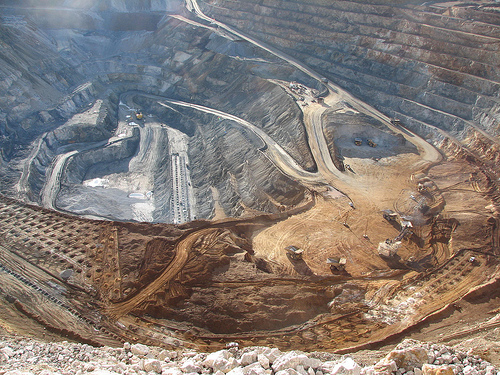
Image credit: flickr User: Mobile Children’s Services in NSW
The ARC grant, which is the largest grant awarded to the Australian resource sector to date, is further complemented with additional $550,000 in funding from mining giant Rio Tinto, reports RMIT.
The research is overseen by Professor Suresh Bhargava, who said Australia’s copper resources were worth $6 billion in annual commodity exports.
“However, the nation’s ore grades are falling and copper sulphide minerals generally exist in low grade deposits that are becoming more difficult to process,” he said.
“Recovery of copper from these deposits is currently hampered by our poor understanding of the fundamental chemistry involved.”
According to him, the project had been specifically designed to leverage a nationwide, multidisciplinary research environment and help improve the knowledge on the matter, which would benefit both Australia’s resource industry and the economy on the whole.
The research project will be focusing on advanced studies on the hydrometallurgy and electrochemistry of primary copper sulphide ores, and will be undertaken by the Centre for Advanced Materials and Industrial Chemistry (CAMIC) in the School of Applied Sciences at RMIT.
Apart from research leader Professor Bhargava, the interdisciplinary team will also include Dr. Lathe Jones and Dr. James Tardio from the School of Applied Sciences.
Rio Tinto scientists and researchers from CAMIC have already held discussions in recent years, looking to resolve specific scientific questions related to the most efficient method to extract metals from copper sulphide ores.
“Chalcopyrite is the most common copper bearing mineral on earth and its processing is very difficult and costly. Last year, CAMIC began investigating a new technique based on Scanning Electrochemical Microscopy to better understand the fundamental electrochemistry of chalcopyrite,” Professor Bhargava said.
“The success of that initial project provided a platform for this new industry-universities partnership to develop electrochemical methods for the leaching of low-grade copper ores that contain chalcopyrite. This is collaboration for our sustainable future.”
The ARC linkage project will also provide training opportunities for CAMIC’s postdoctoral fellows, with the PhD students appointed to the project offered a unique opportunity to work in a multi-disciplinary environment with close industry collaboration.
Professor Matthew Cuthbertson, Deputy Pro Vice-Chancellor Research and Innovation in the College of Science, Engineering and Health highlighted that the technology would provide better economic prospect for the Australian processing industry, as well as invaluable training experience for graduates to meet skill shortages in the resources sector.
The project will only deepen the collaborative research history between RMIT and industry, with many of the University’s graduates and postgraduates working for Rio Tinto, BHP Billiton, Alcoa and CSIRO.