
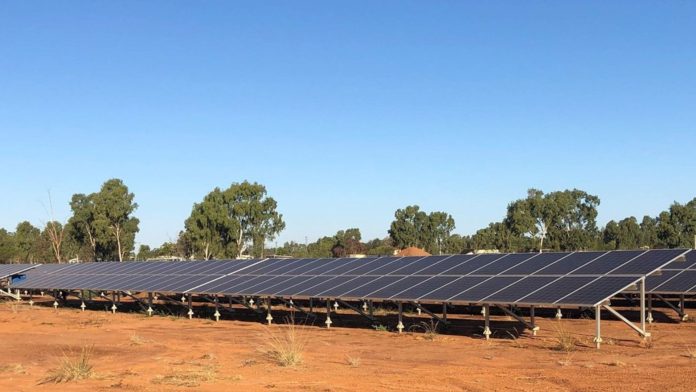
The Queensland Government is delivering $28 million as part of its 2023-24 Budget to help Boulia, Burketown, Doomadgee, and Windorah switch to clean energy technologies.
The remote Queensland communities are set to save $3 million annually by reducing diesel consumption by 1.5 litres and converting to renewables such as solar generation and battery storage systems.
“While these new solar farms might be small in size comparative to the Queensland SuperGrid, the benefit of them to these remote communities is incredibly valuable,” Minister for Transport and Main Road Mark Bailey said.
“This program is proof that the Palaszczuk Government’s Queensland Energy and Jobs Plan is delivering opportunities and benefits of our clean energy transition to all Queenslanders, no matter where they live,” he added.
As announced at the State Government’s Regional Community Forum in Boulia, the initiative would also provide significant environmental benefits through reduced emissions.
According to the State Government, the four projects are tangible evidence of the benefits of the clean energy transition and proof of direct investments being made in some of the State’s most remote communities.
“Because Queenslanders kept their energy system in public hands, they can put the people of these remote communities first in our energy and climate transition, savings millions by switching to solar,” Minister for Energy, Renewables and Hydrogen Mick de Brenni said.
Minister de Brenni stated that the Queensland Energy and Jobs Plan is delivering clean, cheap, and secure energy by supporting more renewable energy and reducing dependency on diesel generation for remote communities.
Ergon Energy Network will deliver the projects across four remote communities.
Energy Queensland Acting Chief Engineer Jason Hall said Ergon Energy Network’s isolated networks are 34 isolated networks spread throughout 39 communities, where Ergon Energy provides both generation and distribution network services in the form of micro-grid.
“Queensland’s isolated networks are mostly powered by dedicated diesel power stations, with some generation coming from a combination of customer-owned rooftop solar PV, and centralised renewable energy installations owned and operated by Ergon Energy Network,” he stated.
“These projects will not only create direct and indirect contractor and supplier jobs in these communities, but they will also create massive savings for these isolated communities,” he added.