
The Grains Research and Development Corporation’s (GDRC) five-year investment to improve soil organic matter to increase soil microbes is expected to generate international interest, according to CSIRO.
The GRDC investment is in collaboration with CSIRO and industry partners Kalyx Australia and Delta Agribusiness.
This initiative expands on the GRDC’s commitment to assisting grain growers in understanding and implementing sustainable farming practices through research, development, and extension (RD&E).
According to an independent audit of GRDC’s RD&E portfolio in 2022, more than a quarter of projects worth nearly $200M assisted the grains industry in adopting improved practices or technology with direct environmental advantages.
In the future, the GRDC is preparing a new RDE Plan 2023-28, with one of the four suggested pillars being ‘Thrive For Future Generations: Australia’s grains industry remains a global leader in sustainability, for people, the planet & our long-term ability to farm’.
This CSIRO-led research will determine the most efficient methods for increasing soil organic matter from crop residues in dryland cropping systems and the cost-benefit analysis of various nutrient and residue management options for grain growers. In addition, the project will conduct a lifecycle assessment of inputs for carbon accounting purposes.
Soil organic matter contributes to various biological, chemical, and physical aspects of soil and is necessary for crop nutrition, soil structure preservation, and water infiltration. Lower amounts of organic matter diminish soil resilience and function.
According to CSIRO, good soil organic matter levels promote increased grain output and quality, but soil organic matter levels in Australia are dropping due to continual cropping cycles. Although plant residues contain a lot of carbon, nutrients like nitrogen, phosphorus, and sulphur are needed to break it down and form healthy soils with lots of humus.
GRDC Sustainable Cropping Systems Manager – North John Rochecouste stated that a nutrient management method that considers soil biota performance and nutrient requirements could prevent the continuous long-term depletion of soil organic matter.
“Retaining carbon via stubble on the ground through no-till farming practices does not always lead to an increase in soil organic matter in the ground,” Dr Rochecouste said.
According to Dr Rochecouste, additions of nutrients, such as nitrogen, phosphorus, and sulphur, are required to help the soil biota ‘digest down’ the stubble carbon into humus.
“This research is necessary because it offers a way to increase soil organic matter and will provide quantitative measures of the carbon benefits and the costs of achieving changes in soil carbon,” he added.
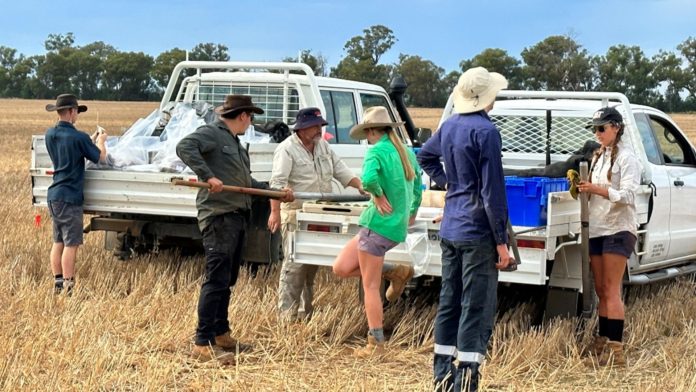
This study will compare the cost and yield benefits of ten different nutrient supply techniques at eight locations in Australia.
CSIRO Chief Research Scientist Dr John Kirkegaard stated that the research showed a comprehensive approach based on a new paradigm was required to ‘fertilise the system, not just the crop’.
“We’re discovering that providing carbon via no-till and stubble retention practices is only part of the process and what we actually need to do is provide the microbes with the nutrients they need to grow their populations while they use the crop residue as the energy source,” Dr Kirkegaard said.
Dr Kirkegaard added that the new joint GRDC and CSIRO research initiative aims to identify the optimum individual nutrient supply techniques for producers based on their specific soil needs.
“We’ll look at a number of factors such as nutrient types, timing and rates, positioning, and even whether we can create a nutrient supply option that targets and uses existing nutrients in soil and residue to reduce costs. No commercial fertilisers currently target these nutrient ratios to build soil organic matter from residue, so there’s potential for fertiliser companies to innovate in product development too,” he noted.