
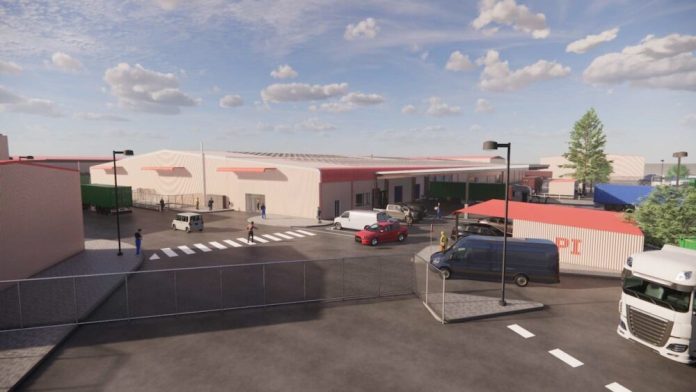
A new $50 million biosecurity treatment facility is set to be developed in Adelaide to provide inspection, quarantine, and treatment of fruit and vegetable produce, a crucial step for exporting South Australia’s produce globally.
The development was announced by the Australian and South Australian governments, along with the South Australian Produce Market.
The initiative is supported by $9.85 million in Federal Government funding, $4.2 million from the State Government, and $36 million from industry. The facility, set to be South Australia’s largest-scale multi-treatment and inspection facility, will utilise pressure cooling and treatment technology.
Federal Minister for Agriculture and Fisheries Murray Watt emphasised the Federal Government’s commitment to protecting and growing Australia’s agriculture sector.
“There is no one-size-fits-all approach to tackling fruit fly, so the funding provided under the Australian Government’s Building Resilience to Manage Fruit Fly package will be aimed at several different methods of controlling this pest, including through post-harvest treatment,” Minister Watt said.
“In addition to this post harvest treatment facility, the package is also providing funding to South Australia to build new and expand existing sterile insect technique facilities, update interstate trade protocols, roll out electronic plant health certification and put in additional roadblocks to protect the Riverland pest-free area,” Minister Watt stated.
According to the State Government, the project, once completed, will generate $100 million in fresh produce exports over 5 years, creating 172 jobs and reducing costs for the State’s primary producers.
According to South Australian Minister for Primary Industries and Regional Development Clare Scriven MLC, the funding will enable South Australia to safeguard and broaden its $1.4 billion horticulture industry.
“Producers in South Australia will no longer need to send their fresh produce interstate to be treated prior to being sold which means less costs for local producers,” Minister Scriven said.
South Australian Produce Market CEO Angelo Demasi stated that the investment will significantly benefit South Australian producers, consumers, and the local economy.
“SA Produce Market is excited to host this world leading precinct which will enable our industry to access state-of-the-art post-harvest treatment services, enabling us to deliver quality local produce even more efficiently and sustainably to our South Australian customers,” Demasi said.
South Australian producers are set to benefit from the new facility that will reduce transport costs, improve profitability, lower product wastage, and lower supermarket produce costs.
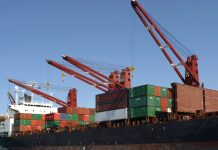
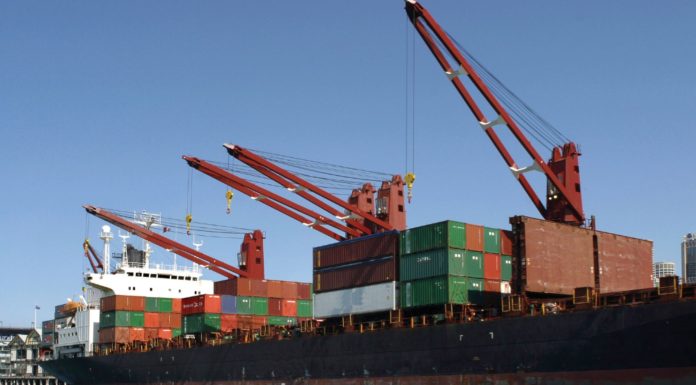
The project will establish a post-harvest treatment service with pressure cooling and treatment technology, enabling South Australian produce to be exported to more overseas destinations.
“Having this technology here also opens the door to other potential and exciting benefits to the State from sectors such as health and medical, space and defence,” Minister Scriven said.
The State Government explained that previously, SA growers encountered difficulties selling to particular markets during fruit fly epidemics. SA experienced a Med Fly outbreak in metropolitan Adelaide in 2020 and 2021 and is currently suffering a Q-Fly outbreak in portions of the Riverland.
In addition, the State Government noted that the new biosecurity precinct will inspect, quarantine, and treat produce from fruit fly-impacted areas within the State before distribution overseas and to retailers across South Australia, Western Australia, and Northern Territory.
“This facility, the first of its kind in the nation, will ensure South Australia’s premium, clean, and green produce – the envy of the world – is protected,” Minister for Trade and Investment Nick Champion MP said.
“This importance of safeguarding our environment for agribusiness and exports cannot be understated and will only bolster our international reputation as we are able to get produce to market faster,” Minister Champion added.
Construction on a new biosecurity precinct is set to begin in February 2024, offering a sustainable alternative and potentially increasing the shelf life of fresh produce for export.
“Through the introduction of this game changing biosecurity precinct, South Australia will soon become an attractive destination for global produce companies looking to establish a presence in the Asia-Pacific region, strengthening our industry’s position in the global market, creating even more jobs, and making additional contributions to our state’s economy,” Demasi said.