
Curtin University announced that the Curtin Corrosion Centre and Chevron Australia are collaborating on a new research project to revolutionise how corrosion is managed in oil and gas plants worldwide through an Australian-first-flow-loop facility.
The Extreme Service Flow Loop facility will be designed, built, and operated by the Curtin team with funding from Chevron Australia, totalling over $2.5 million. According to the university, the facility’s goal is to reduce maintenance costs and improve corrosion management, helping operators reduce the risk of harm to critical infrastructure and the environment.
The Extreme Service Flow Loop facility will replicate the high-flow settings in pipelines and other parts of the oil and gas industry. By examining the impact of pipes moving gas fluids in a controlled setting, according to Curtin University, their team will be able to measure and forecast corrosion damage. To emulate actual business activities, the university said, their team will be able to define operating parameters, including flow rate, temperature, pressure, single or multiphase, piping diameter, and a choice of corrosion probes and sensors.
Curtin Corrosion Centre’s Associate Professor Ahmed Barifcani said Chevron’s investment would transform corrosion control strategies worldwide.
“Western Australia continues to be a leading energy producer, so it is critical to develop local capabilities to assist with maintaining the large-scale plants that operate in our State. This funding will allow our team to manage this ongoing issue locally here in WA, without relying on international facilities for testing,” he stated.
The university has described corrosion and its potential effects on important infrastructures as a frequent and expensive issue many offshore operators deal with.
“Essentially, we will use the research to both predict and prevent corrosion in pipelines, so they can be repaired to reduce the risk to the environment, while also providing companies with information that can help them build oil and gas pipelines with more confidence in remote and previously inaccessible locations,” Barifcani said.
Professor Barifcani added that the facility would support better material selection and corrosion management techniques, extending product lifetime and ultimately facilitating the transition to a circular, environmentally-sustainable economy.
Curtin Corrosion Centre Director Professor Mariano Iannuzzi welcomed the university’s partnership with Chevron Australia and its positive impacts on the industry.
“The team at the Curtin Corrosion Centre looks forward to working together on this project with Chevron Australia, which will result in significant benefits for industries which operate near or offshore, such as Australia’s LNG industry, as well as large-scale operations that might be affected by corrosion,” Iannuzzi said.
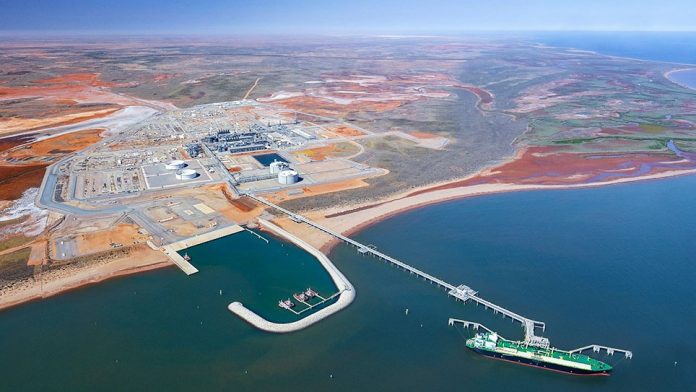
The Extreme Service Flow Loop, slated to be completed in 2023, will initially focus on the Chevron-operated Gorgon and Wheatstone natural gas facilities in Australia’s North-West.
Chevron Australia Director of Operations Kory Judd expressed his pleasure at continuing to collaborate with the Curtin Corrosion Centre to assist the development of Western Australia’s world-class energy business.
“We’re proud to partner with the Curtin Corrosion Centre to build local capabilities and expertise in corrosion management – an important maintenance area for our industry that has the potential to create new jobs and post-graduate research opportunities in Western Australia,” Judd said.