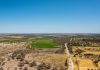


The Kaban Green Power Hub in the Far North has hit a significant milestone, with the $373 million wind farm project now officially linked to Queensland’s new SuperGrid.
Premier Annastacia Palaszczuk, Deputy Premier Steven Miles, and Minister for Energy and Renewables Mick de Brenni were all on hand today to help get the project up and running.
The project is a component of the Premier’s last week-announced Queensland Energy and Jobs Plan.
Premier Palaszczuk said the 157MW project can now provide clean green renewable energy to households and businesses in the Far North.
“The Kaban Green Power Hub being energised via Powerlink’s Tumoulin Switching Station means clean energy is being injected into the new Queensland SuperGrid. Construction of the project is now past the halfway mark with 16 of the 28 turbines complete,” the Premier stated.
When finished in the first quarter of 2020, Premier Palaszczuk added that it would provide 460,000 MW of clean energy annually, sufficient to power up to 100,000 homes.
According to the Premier, the project would be crucial in assisting Queensland in reaching its new goal of 70 per cent renewable energy by 2032.
“As part of the Queensland Energy and Jobs Plan, we are bringing more renewable energy into the network through projects like the Kaban Green Power Hub, delivering cleaner, cheaper energy to Queenslanders,” Premier Palaszczuk said.
The Premier added that the recently announced Queensland Energy and Jobs Plan outlines our strategy for releasing 100,000 new, high-quality jobs across the state, primarily in regional Queensland, and even more renewable energy.
The Kaban Green Power Hub, which supports 250 jobs, is part of the Northern Queensland Renewable Energy Zone.
Global green energy behemoth Neoen is developing the project, and publicly traded CleanCo has agreed to buy all the produced renewable energy.
Deputy Premier Steven Miles said it was the first project in the Northern Queensland Renewable Energy Zone.
“This project is perfectly positioned to capitalise on the world-renowned wind resources of Northern Queensland. By bringing more renewable energy into the system, we can help put downward pressure on prices,” Deputy Premier Miles stated.
According to the Deputy Premier, the project is an excellent example of Queensland’s energy transition: delivering more renewable energy at a reduced cost while also creating more jobs and opportunities for renewable investment in Queensland.
Minister for Energy, Renewables, and Hydrogen Mick de Brenni said the Palaszczuk government announced a $700 million investment in North Queensland’s transmission network over the next five years to bring more sustainable energy into the grid.
“This new transmission infrastructure will be delivered by Powerlink and will unlock an additional 500MW of renewables capacity in the region. Projects like this enable the cost-effective connection of multiple renewable energy developments into the network, making it easier to bring more clean energy to enter the system,” Minister de Brenni stated.
Minister de Brenni added that the Queensland Energy and Jobs Plan emphasises the importance of leveraging public ownership of our energy industry to encourage investment in large-scale generating, transmission, and storage infrastructure, which this project is assisting with.
CleanCo, a publicly owned low-emissions energy generator and retailer, will utilise 100 per cent of the clean electricity generated by the Kaban Green Power Hub.
Neoen Managing Director Louis de Sambucy stated that the company was particularly proud of Kaban’s role as the cornerstone project of Queensland’s first Renewable Energy Zone, and that the company was thrilled to have attained this significant milestone of the first energisation.
“I’d like to thank the Queensland Government and CleanCo for their vision and support, and Powerlink for their hard work and commitment in delivering the essential transmission infrastructure,” de Sambucy said.
The 28 wind turbines built on the site will extend 230 metres from the base of the tower to the highest tip of the blade to fully exploit the region’s wind potential.