
Anson Resources Limited filed a Notice of Intent (NOI) to the United States Department of the Interior, Bureau of Land Management (BLM) to begin drilling at its Green River Lithium Project in Utah’s Paradox Basin.
According to Anson, the drilling program is intended to produce a maiden lithium JORC Mineral Resource at the Project, which would significantly increase the Company’s existing JORC Mineral Resource inventory in the Paradox Basin; Anson’s flagship Paradox Lithium Project, located 50 kilometres to the south-east, has current JORC Mineral Resources of 1.04 million tonnes of lithium carbonate equivalent (LCE) and 5.27 million tonnes of bromine.
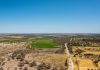
The Green River Project comprises 1,261 placer claims spread across 106.2 km2 (10,620 hectares). Anson intends to perform a three-well re-entry program at the Green River Project, including brine sampling and pump testing on the targeted clastic zone horizons and Mississippian units. The initiative is intended to help the Project’s Exploration Target become a JORC Mineral Resource.
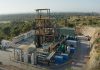
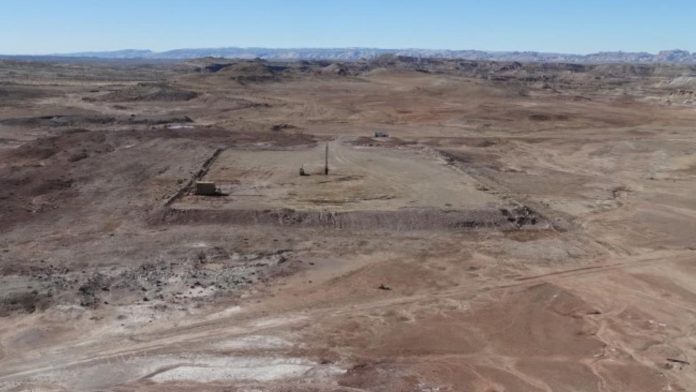
Anson plans to begin drilling as soon as the NOI is accepted by the BLM. Anson said drill pads from prior drilling remain in place, and other drill pads just need to be re-established. According to the Company, it will ensure that there is a minimum new ground disturbance.
Furthermore, the drill pads are close to existing roadways, thus, no new access routes will be required. Anson said these aspects would contribute to a low environmental, social, and recreational effect within the Project area. The utilisation of previously disturbed terrain is consistent with Anson’s goal of building a sustainable project while minimising environmental effects.
Anson added that the NOI submitted to the BLM is for the re-entry of three wells, all of which are positioned next to regional geological formations with the potential to aid in the future extraction of brines – as indicated by the Green River project’s boiling cold, saltwater springs and geysers.