
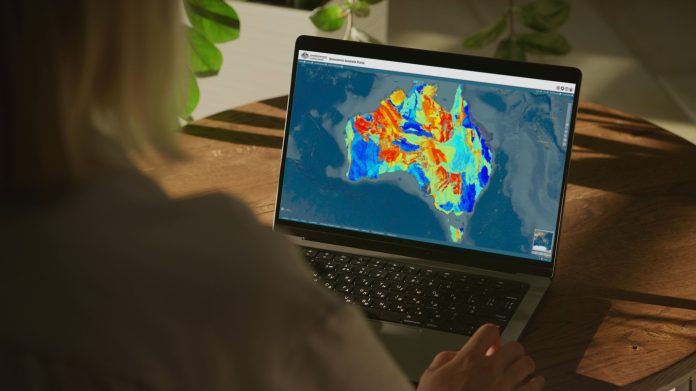
The Australian Government announced its support for the exploration of minerals following the publication of new data and four new Mineral Potential Maps.
The data, gathered with the assistance of the Geological Survey of Western Australia, will aid exploration in underexplored areas of the country and will be critical in ensuring that Australia’s base metal production and exports continue to meet rising global demand.
According to the Federal Government, the resources are critical in producing batteries, wind turbines, solar panels, and other renewable energy technologies.
Minister for Resources and Northern Australia Madeleine King stated that the information, collected as part of the Exploring for the Future program, is critical to ensuring Australia is well-positioned to capitalise on a thriving global clean-energy market and safeguard our future economic prosperity.
“Thanks to years of hard work and geological research by Australian scientists, we are now able to better predict the location of resources, including critical minerals, that will be essential for the world to meet its net-zero emissions targets,” Minister King said.
Minister King added that the freshly released maps, reports, and other helpful data build on Geoscience Australia‘s 2016 Mineral Potential Mapper project’s success. According to Minister King, this project paved the way for the discovery of Chalice Mining’s Gonneville deposit near Julimar, Western Australia, in 2020, which was the world’s largest nickel sulphide discovery in more than 20 years and the greatest platinum group element discovery in Australian history.
“The mineral potential mapping approach integrates decades of Geoscience Australia’s expertise with a wide range of geoscientific datasets to transform big data into predictive power, raising the prospect of more exciting discoveries,” Minister King stated.
Minister King hoped that any future discoveries would benefit the surrounding regional communities and the entire country.
“Gaining a better understanding of our geology is key to the sustainable development of our resources and is integral to Australia’s- and the world’s transition to net zero emissions by 2050,” Minister King said.
Geoscience Australia is developing more national mineral potential assessments for sediment-hosted copper in the coming months, another critical component in Australia’s journey to net zero.
“With 80 per cent of the Australian continent still underexplored, investment in precompetitive data through the Exploring for the Future program will continue to put a wealth of key information in the hands of governments and other important stakeholders, to better predict where natural resources will be, for the benefit of communities, industry and the environment,” Minister King added.
Since 2016, the $225 million Exploring for the Future program has been collecting preliminary data on Australia’s geology. The program promotes a robust economy, resilient society, and sustainable environment for the benefit of all Australians by serving the interests of the government, local decision-makers, investors, explorers, and regional Australians.