
Australian farmers are progressively implementing new sustainable farming practices to increase agricultural productivity while protecting their land for future generations, Commonwealth Bank (CommBank) said.
According to new CommBank statistics, there has been a 182% rise in Agri Green Loan queries since the program’s inception in November 2021, with farmers in New South Wales (+340%) and Victoria (+154%) leading the charge.
CommBank Executive General Manager Regional and Agribusiness Paul Fowler stated that agribusinesses are attempting to become more sustainable.
“At CommBank, we are seeing an acceleration in momentum as well as a shift in the types of conversations we’re having with our customers around the opportunities across sustainable practices to advance their environmental goals while improving farm assets and productivity,” Fowler said.
Fowler added that farmers are transitioning from enquiry to action. He said the transition is driven by opportunities to increase efficiency, distinguish products, and secure supply chains.
Among the numerous farmers experiencing the benefits of regenerative farming are Narelle and Mark McDonald of Gippsland, who have operated a thriving beef and dairy operation augmented by regenerative principles for over ten years.
According to CommBank, McDonalds recently used a CommBank Agri Green Loan to finance a multi-species pasture repair program to restore soil quality on their newly purchased farm, which will help them in the long run.
CommBank also assisted the farm in diversifying its income by selling beef on dairy, a method that addresses a long-standing issue in the dairy industry involving surplus calves.
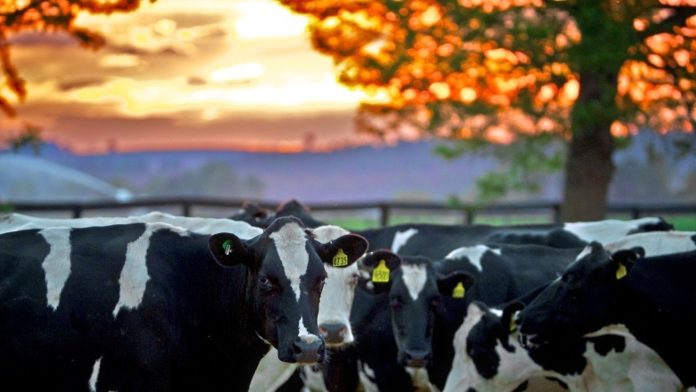
The McDonalds breed Friesian dairy cows with Wagyu bulls, which are lighter and easier to calve. The use of genetic testing has aided in the identification of the best dairy cows to breed with sexed sperm. The first-generation female calves are raised as part of the dairy herd, while the remaining male calves are raised on the farm and sold in the beef market.
McDonalds’ regenerative farming strategy dramatically reduces the usage of sprays and fertilisers.
According to Mark, as dairy producers, its margins have dwindled over time, so the company have turned to regenerative farming to cut production costs by reducing synthetic inputs.
“We now manufacture our own organic compost and use occasional supplements in response to our system’s needs to lift the measured health of pastures, which underpins the nutrient density of our produce,” Mark said.
He stated, “We’re not just committed to creating a more profitable and productive farm, we are trying to create a better environment, healthier food, and leave something better for the future.”
The McDonalds praised CommBank for its assistance.
“It is reassuring to partner with a bank that is aligned to our values. CommBank understands exactly how we’re farming. They are right behind us and this has removed a lot of the worry for us. Having a bank that will back us is so important. We’re not quite done growing,” he added.