
Queensland sugarcane farmers are using cutting-edge technology to better manage water, time, and resources, all while helping to enhance water quality on the Great Barrier Reef.
According to the Great Barrier Reef Foundation, sugarcane paddocks in the Burdekin region have traditionally relied on manual irrigation systems with pumps that must be activated by farmers or gravity-fed pipes that feed water to the field. The foundation said both necessitate the activation and deactivation of valves, including overnight and on weekends. The organisation added that farmers have conflicting interests, making irrigating at the most efficient periods difficult.
The Great Barrier Reef Foundation explained that this practice provides no control or visibility over the exact amount of water entering their crops. This not only increases the amount of contaminants, such as pesticides, fertilisers, and sediment, that drain off the land and into streams that flow out to the Reef.
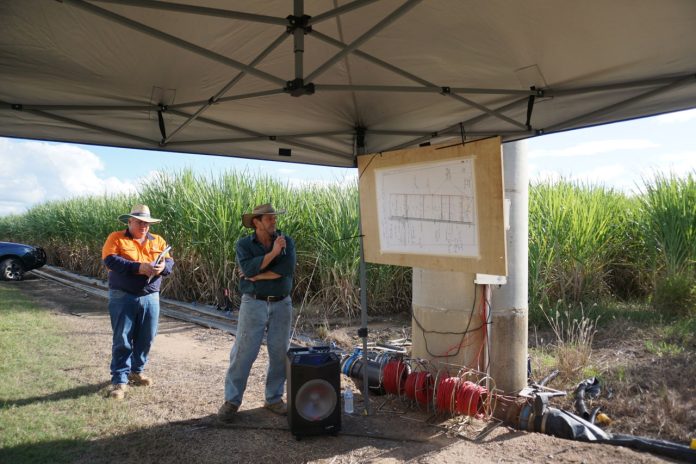
The foundation is investing in programs that assist farmers in applying improved irrigation management practices to avoid these contaminants from reaching the Reef. The Burdekin Irrigation Project, funded by a collaboration between the Australian Government‘s Reef Trust and the Great Barrier Reef Foundation, aims to assist sugarcane farmers in transitioning to more efficient, automated irrigation to reduce costs, improve productivity and profitability, and reduce farm runoff.
The Great Barrier Reef Foundation noted that farmers could plan, manage, and maintain their crop irrigation online via websites and apps by automating the irrigation systems.
Paul Villis, a Burdekin farmer, built an overhead irrigation system linked to an app that allows him to track and schedule his water consumption.
“We have noticeably reduced the amount of water that we would normally use from our water allocation and we used to use it all. I’ve got an app on my phone and I can see what’s going on wherever I am. I push the button and it’s irrigating. You can monitor everything that’s going on from your phone all the time and there’s minimal runoff,” Villis said.
Meanwhile, Joe and Aaron Linton have also moved to web-based software to fully automate their sugarcane field irrigation, with trickle tape fitted throughout. They’ve also put up timers to irrigate during off-peak energy hours.
“With flood irrigation you’re out there in the paddocks, checking the drills and opening the outlets. Whereas now it just happens. I can spend my time doing other things I need to do that make more money, not doing the mundane things. It costs a bit of money to set up, but I know we’ve got that money back already,” Aaron stated.
Additionally, another Burdekin Irrigation Project participant Steve Pilla said his new automated system had eliminated late-night treks to the fields to adjust water pumps or valves.