
The Australian Lunar Experiment Promoting Horticulture (ALEPH) project has secured $3.6 million as part of the Australian Space Agency’s Moon to Mars Initiative
The ALEPH project is run by start-up Lunaria One, with major Australian university partners RMIT, QUT, and ANU, as well as industry organisations.
According to the RMIT, investigating whether seedlings can develop on the lunar surface is of fundamental biological interest and crucial to know for future space travel, but it may also provide information about growing plants in a changing climate on Earth.
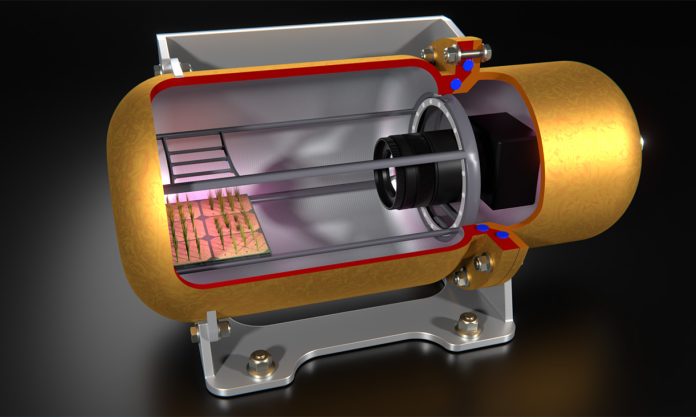
Lunaria One co-founder and engineering lead for the project RMIT’s Dr Graham Dorrington stated that the seeds and plants will be delivered onboard a lunar lander slated for a trip in 2026 in a specially built and hermetically sealed capsule equipped with sensors, water, and a camera.
“Our major challenge is designing the chamber to maintain suitable conditions to permit germination on the lunar surface, where the external surface temperature fluctuates from highs of 80°C to lows of –180 °C,” Dr Dorrington said.
The chamber must also be lightweight (no more than 1.5 kg) and capable of operating on minimum power while relaying data back to Earth through the lander at data rates of less than 40 kb/s.
RMIT will also provide expertise in plant biology from the School of Science, chaired by Associate Professor Tien Huynh.
“We know some plants grow differently in altered gravity conditions, but don’t yet fully understand how and why. In addition, the harsh lunar environment has a thin atmosphere, rapidly changing temperatures, and relatively poor soil properties, meaning that whatever we grow on the surface will need to be hardy,” Professor Huynh said.
Rapeseed (Brassica napus), a yellow-flowered plant produced for a variety of food production and industrial purposes, is one of the plants under consideration for the mission.
“Preliminary results suggest this could be a good candidate as far as extreme temperature tolerance and germination speed for surviving a mission to the Moon or Mars,” Professor Huynh stated.
After landing on the lunar surface, the plants’ development and overall health will be tracked, and data and images will be transmitted back to Earth. To facilitate this component of the process, RMIT will also contribute computer science skills in data compression.
RMIT Deputy Vice-Chancellor STEM College and Vice-President Professor Ian Burnett said the cross-disciplinary study might give vital insights into sustaining horticulture in the world’s harsh climates.
“We view the development of this lunar payload as an excellent opportunity to tackle extreme engineering and biological challenges that will likely lead to terrestrial benefits as well as answers for space exploration,” he stated.
Citizen scientists and students worldwide will be invited to utilise this information to undertake their own studies to determine which plant species have the highest chance of flourishing on the Moon.
“We don’t want a future where only autonomous and remote-controlled machines inhabit realms beyond earth, but where humans can live and thrive,” Lunaria?One Director Lauren Fell said.
“We don’t want a future where only autonomous and remote-controlled machines inhabit realms beyond earth, but where humans can live and thrive,” she stated.
According to Fell, the ALEPH project aims to make the science and engineering of developing life on the Moon accessible to everyone.
The collaboration with Lunaria One will strengthen RMIT’s expanding space industry eco-system, coordinated by the university’s Space Industry Hub.
The initiative involves a dozen RMIT engineers, scientists, educators, and industrial design students.
The plant biology team will benefit from the expertise of Ben Gurion University in Israel, which will coordinate the contributions of international experts. Supporting workshops will be organised by ANU.