

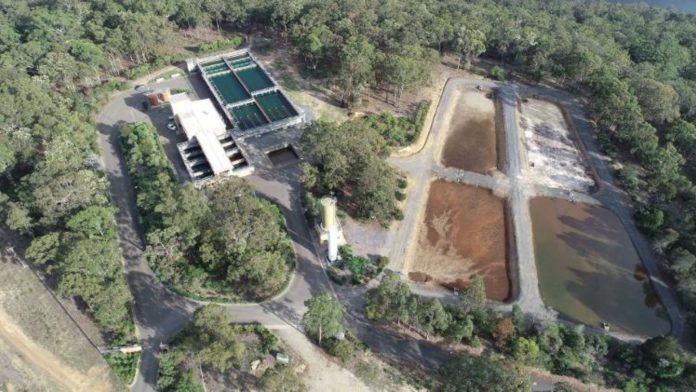
The University of Wollongong’s (UOW) Australian Power Quality Research Centre (APQRC) has partnered with Shoalhaven Water to offer battery backup solutions that will increase electrical resilience for sewer pumping stations.
The new system, which has been under development for two years, was delivered last month and is already functioning in Shoalhaven Heads.
Previously, Shoalhaven Water relied on a staff person to be on call 24 hours a day, seven days a week, to attach a diesel generator at any location that encountered an outage. With only one generator and several possible sites, there was a high danger of system failure.
The installation of lithium-ion batteries at up to ten locations would significantly improve energy resilience by providing local battery storage of up to four hours, which will cover about 95% of typical power outages without the need for a technician to visit the site.
APQRC Research Coordinator Sean Elphick stated that recent flooding and harsh weather in NSW have emphasised the significance of resilient infrastructure.
“Failure of sewage pumping stations can lead to discharge of untreated sewage to the environment, with serious impacts for local communities. This project will be a showcase for how the innovative use of battery technology can improve the resilience of critical distributed infrastructure,” Elphick said
The project, which is part of the ARC Research Hub for Safe and Reliable Energy, maintains Shoalhaven Water’s energy resilience while also expanding the APQRC’s industrial capabilities.
“The project between Shoalhaven Water and the APQRC showcases industry-academic collaboration between UOW and industry partners, creating a test case for future battery technology and providing real-world industry application experience for researchers and students,” Elphick stated.
The solution includes lithium-ion batteries rated at 5 kW/15 kWh, as well as a three-phase battery inverter system and variable-speed motor. This is an innovative application of established technology to address a real-world industrial issue. In the long run, the initiative will allow for the evaluation of battery performance in the field under sometimes harsh climatic circumstances. The project also allows for the evaluation of various battery technologies, advancements in energy storage safety, and the establishment of a virtual power plant comprised of distributed energy storage resources.
According to Shoalhaven Water Executive Manager Rob Horner, technology will have a long-term positive influence on the Shoalhaven community.
“We’re thrilled to team up with UOW to make improvements that benefit the Shoalhaven community and our environment,” Horner said.
Horner stated that Shoalhaven Water has a good track record in providing water and wastewater services to our region, therefore, the company must continue to seek ways to innovate its operations through these types of experiments.
“This technology has the potential to radically improve our operation and safeguard our environment from sewerage discharge. Working on a shared vision with APQRC has proven to be incredibly rewarding and we’re confident we’ll see great results once deployed in our facility,” Horner added.