
Professor Sunil Kadri, a global expert in aquaculture research and development, who employs sonar technology to evaluate fish wellbeing on Norway’s aquaculture farms, hopes to continue his research in Australia.
Professor Kadri recently relocated from Southern Chile to become a Professor of Tropical Aquaculture at Charles Darwin University’s (CDU) Research Institute of Northern Agriculture (RINA).
The fish welfare project is investigating methods to assess the health of whole fish populations inside farms and forecast disease outbreaks to allow for early intervention.
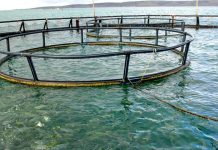
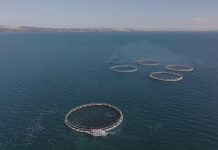
According to Professor Kadri, a hydroacoustic system can monitor the behavioural patterns of the majority of the fish population in huge cages even when water quality and light levels are inadequate for studying fish behaviour using more traditional approaches.
“This project is an important piece of work. The aquacultural industry continues to grow globally and the fast-paced nature of the industry means that it is becoming more automated, and the monitoring of fish health and welfare becomes increasingly challenging and crucial,” Professor Kadri said.
The research, which is about halfway through, entails gathering and evaluating data to identify behavioural signatures associated with various stresses and health events.
“We use a sonar system that detects individual fish positions based on the echo from their swim bladder and this allows us to monitor population behaviour 24/7. We have used this system to collect data over an extended period on a number of commercial salmon farms. A previous study using a basic version of the same system revealed its capability to detect disease indicators over a month prior to detection using standard procedures,” Professor Kadri explained.
The Professor stated that so far, the findings have proved the system’s utility in detecting various stress events and monitoring recovery timeframes from such occurrences.
“In order to deliver robust disease prediction tools to farmers, however, we need to collect more datasets enhanced with metadata regarding farming operations,” he added.
Professor Kadri joins CDU with over 30 years of expertise in the aquaculture business, with a focus on fish behaviour and welfare.
Professor Kadri is now at CDU and hopes to use his knowledge and expertise to assist in addressing the issues of the aquaculture business in Northern Australia and South-east Asia, including the Norwegian project, which he continues to manage.
His interests also include helping to expand the Indigenous aquaculture space in the Northern Territory, which he is already involved in his home country of New Zealand.
“I am excited to bring my experience to the Northern Territory’s aquaculture sector and I think we should look to bring the concept we are developing in Norway to the Northern Territory and the wider region to make a real difference to the aquaculture industry here,” Professor Kadri said.
Professor Steve Rogers, CDU’s Deputy Vice-Chancellor for Research and Innovation, stated that he is looking forward to working with Dr Kadri.
“We are very happy to have Sunil on board. His expertise will bring a different perspective to aquaculture research at CDU and indeed the Northern Territory,” Professor Rogers said.
CDU established RINA in late 2022 with the goal of promoting agricultural innovation in Northern Australia.
In addition to Professor Kadri, RINA has recently welcomed the appointment of three other Professors, including Maxine Piggott, Associate Professor of Pastoral Production Systems and Sustainability, and Chengyuan (Stephen) Xu, Professor of Broadacre Cropping Systems.
RINA is funded by the Australian Government and supported by project partners such as the Department of Tourism, Industry and Trade (DITT), NT Farmers, NT Cattlemen’s Association, NT Seafood Council, Murdoch University, James Cook University, and Central Queensland University (CQU).
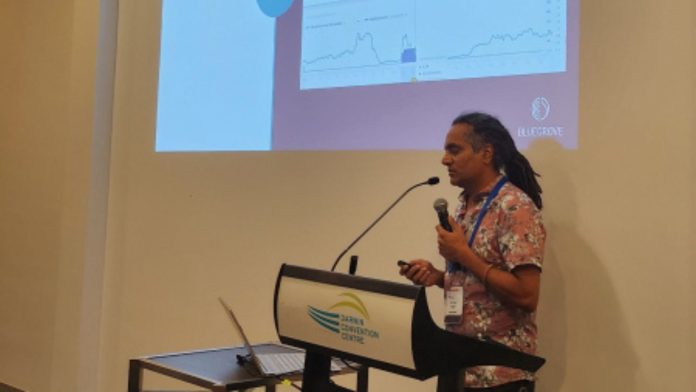
Professor Kadri presented his research at the World Aquaculture Conference 2023, which was held this week in Darwin.