
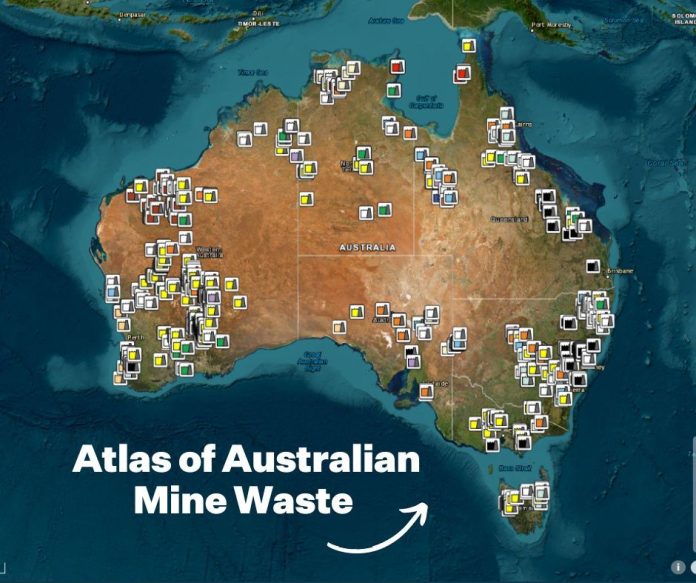
The new Atlas of Australian Mine Waste may contribute to Australia’s worldwide standing as a clean energy powerhouse, the Australian Government said.
Geoscience Australia‘s Exploring for the Future program will utilise the atlas to search for locations around the country that may contain previously overlooked critical minerals, such as those required to manufacture electric vehicles and solar panels.
The Atlas of Australian Mine Waste is a cooperation between RMIT University, the University of Queensland, and the geological surveys of Queensland, New South Wales, the Northern Territory, Victoria, and South Australia.
Minister for Resources and Northern Australia Madeleine King stated that the new Atlas of Australian Mine Waste might give businesses further chances to retrieve valuable materials from previously mined rock and soil.
“Some of the minerals we need now, and into the future, may not just be in the ground – they’re also in rock piles and tailings on mine sites around the country,” Minister King said.
According to Minister King, these minerals, which may not have been of interest when initially mined, may suddenly be in high demand as the world strives to decarbonize – for example, cobalt in ancient copper mine tailings.
The Minister stated that so far, the Atlas has identified 1,050 locations around Australia as potential sources of critical minerals.
“Our resources sector is the key to our net zero future – and this is another tool developed by Government to help facilitate the discovery of critical minerals in a more efficient, sustainable way – and to the highest standards,” Minister King said.
“Reprocessing rocks and earth that have been previously excavated during mining operations can give new life to old mining towns, create jobs and rejuvenate local economies,” Minister King added.