
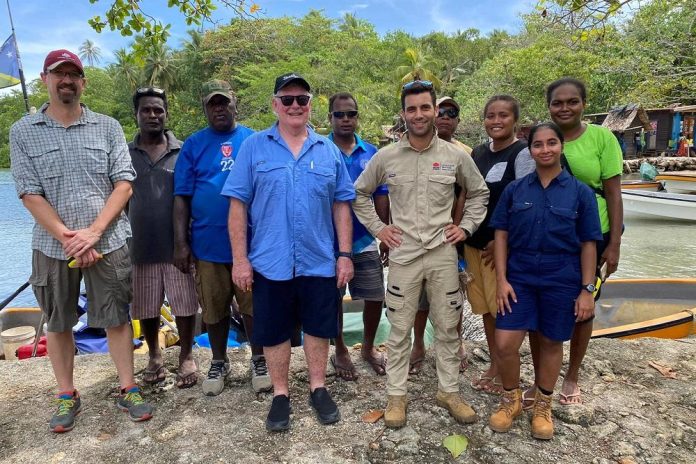
The Department of Agriculture, Fisheries, and Forestry (DAFF) is collaborating with the Solomon Islands Ministry of Agriculture and Livestock (MAL) on projects to address biosecurity concerns in the Pacific region.
The initiatives are aimed at enhancing local capacity in areas such as animal health and welfare, agricultural productivity, exotic disease preparedness, biosecurity, food security, and One Health outcomes.
Exotic animal illnesses, such as African swine fever and avian influenza, pose a danger to regional food security as well as the livelihoods of small-holder farmers and local people throughout the Pacific.
As part of DAFF’s Pacific Engagement Program for Animal Health (PEPAH), the Department of Foreign Affairs and Trade (DFAT) Solomon Islands Biosecurity Development Program is supporting the team of veterinarians with funding.
According to the Australian Government, their collaboration with MAL in the Solomon Islands involves raising awareness of exotic disease dangers and assisting in the development of preparation, monitoring, and risk analysis capacities. The Solomon Islands are better equipped to direct their efforts by recognising possible risk pathways for animal illnesses.
The DAFF team is also collaborating with Australian Volunteer Program veterinarian Dr Nigel Gillan who is presently on placement with MAL, to improve local veterinary and biosecurity capabilities in preparation for the 2023 Pacific Games. The Federal Government stated that the Games, which bring the Pacific together in Honiara at the end of the year, are also a key test of the Solomon Islands’ biosecurity.
Australian Chief Veterinary Officer Dr Mark Schipp underlined the significance of knowing the Pacific biosecurity landscape to the success of preventive, detection, and preparation programs.
“The recent spread of African swine fever in the region, coupled with increasing investments in logging and fishing operations, combine to create risk pathways for exotic animal diseases entering the island nation,” Dr Schipp said.
“By supporting regional biosecurity capacity building activities, we can work towards proactively managing the biosecurity risks to the Pacific before they impact on people’s livelihoods and food security. This benefits Australia’s biosecurity, while providing us the opportunity to strengthen our bilateral partnerships with our Pacific family,” Dr Schipp stated.
He added that the department’s work in the Pacific contributes to the achievement of key strategic objectives outlined in its Commonwealth Biosecurity 2030 roadmap, National Biosecurity Strategy (2022-23), and Pacific Biosecurity Strategy (2022-2027).
PEPAH’s objective is to work within DAFF’s Pacific Biosecurity Strategy to build long-term, trusting, and mutually beneficial connections with Australia’s Pacific family in order to enhance animal health, biosecurity, and food security results.