
A research partnership between Australia and India could provide a solution to a number of energy concerns and ultimately reduce the reliance of both countries on imported fuels, according to a latest research statement from the Commonwealth Scientific and Industrial Research Organisation (CSIRO) released on Thursday.
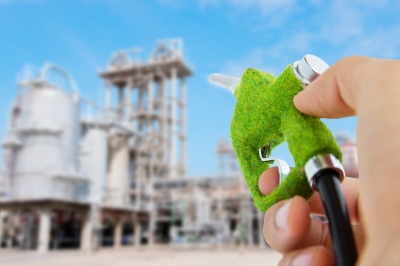
![Image courtesy of [ponsulak] \ FreeDigitalPhotos](http://australianresources.com.au/wp-content/uploads/2013/10/ID-10083819.jpg)
The three-year project jointly funded by the Australian and Indian governments, through the Australia-India Strategic Research Fund will focus on improving processes involved in the production of DME, which is a liquid fuel produced from natural gas, coal, biomass, or even directly from carbon dioxide.
Both countries are currently unable to meet demand for petroleum products with domestic production alone. DME could help meet demand and consequently reduce both nations’ reliance on imported petroleum products.
According to CSIRO’s Dr. Nick Burke, all of over half a million vehicles currently using liquefied petroleum gas in Australia could be powered using DME.
“The fact that DME can be used as a blend in existing LPG engines makes it an effective transitional fuel.”
Dr. Burke also said that Australia’s heavy reliance on diesel could be lessened with the added possibility of DME being able to replace diesel in the future.
The leader of the Indian consortium Dr. Garg explained that India’s demand for liquid petroleum gas (LPG) is currently unable to be met by domestic production.
“In India, LPG is currently used for cooking in more than 33 million homes and demand is increasing with imports rising rapidly” said Dr. Garg.
Prof. Paul Webley from The University of Melbourne said in addition to the economic benefits, DME will provide significant environmental benefits for both countries as it produces significantly less pollution than conventional fuels, reducing urban pollution.
The research will also assist in the development of small plants that may be suitable in remote and rural areas.
“More efficient processing of gas into transportable fuels at remote locations would make Australia and India’s remote gas reserves more economically viable,” said Prof. Suresh Bhargava from Royal Melbourne Institute of Technology.
CSIRO has been collaborating with India across a range of areas for many decades. Dr. Burke said the company is excited to be expanding its relationship and collaborating on key issues affecting both nations.
In addition to CSIRO and the Indian Institute of Petroleum (CSIR-IIP), the project will also draw on the expertise of the Indian Institute of Technology (IIT-Roorkee), Bharat Petroleum Corporation Limited (BPCL), The Center of Advanced Materials and Industrial Chemistry (CAMIC) at RMIT, and The University of Melbourne.