
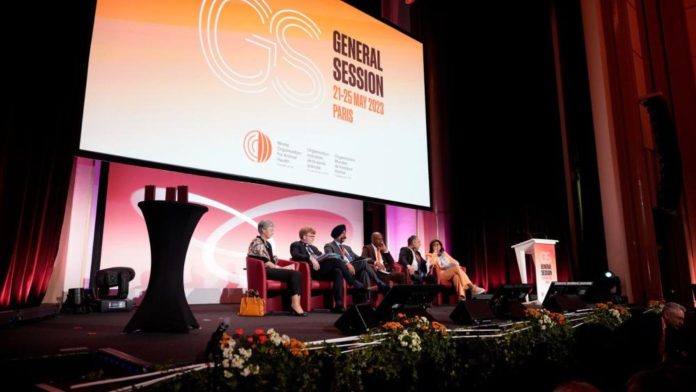
Senior Australian specialists, headed by Australia’s delegate to the World Organisation for Animal Health (WOAH) and Chief Veterinary Officer Dr Mark Schipp are in Paris to attend the World Assembly of Delegates’ 90th General Session.
The global animal health authority, WOAH, coordinates emergency responses, prevents zoonotic diseases, and promotes animal health and welfare. According to the Australian Government, the authority’s standards underline trade and market access agreements.
This is the first face-to-face gathering of WOAH since 2019 and serves as a reminder of the 182 Members’ unity in the battle against infectious animal diseases.
During the event, key organisational choices and crucial international animal health standards will be debated and agreed upon.
Members of the Australia delegation represent the department, jurisdictional governments, and industry associations. Representatives from CSIRO, the Australian Veterinary Association (AVA), the Australian Chicken Meat Federation, Wool Producers Australia, and Wildlife Health Australia are among those attending.
Dr Schipp will be joined by Dr Ingo Ernst, President of the WOAH Aquatic Animal Health Commission, and Professor Trevor Drew, Director of the Australian Centre for Disease Preparedness at CSIRO and Vice President of the WOAH Scientific Commission for Animal Diseases.
This year’s WOAH General Session will focus on high pathogenicity avian influenza (HPAI). The Federal Government said while Australia is now HPAI-free, chances to learn from and influence global methods are vital to ensuring Australia’s readiness.
Over the first two days of the General Session, an Animal Health Forum will examine this illness for the first time. Delegates and other experts will address surveillance and monitoring for early detection and prevention, disease control measures, commerce, and global cooperation during the meeting.
The Government added that its delegation, with expertise in disease control, poultry, wildlife, and laboratory diagnostics, are eager to contribute to this global dialogue and learn from other nations’ HPAI experiences.