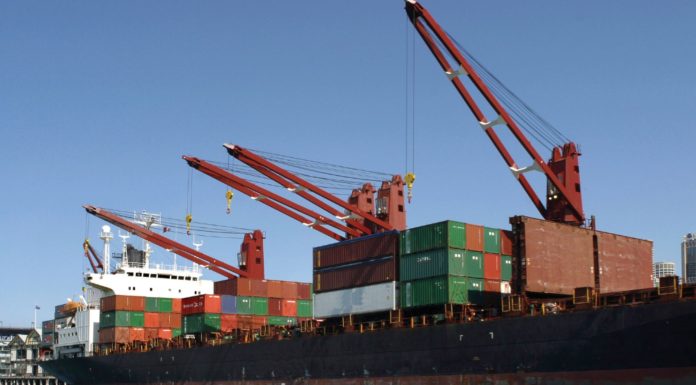


The Australian Government has released the June 2023 Resources and Energy Quarterly, with new data indicating that Australia is on course to set a record for resource and energy exports in 2022-23.
Published by theDepartment of Industry, Science, and Resources’ Resources and Energy Quarterly, the report showed that resources and energy exports earned a record $459 billion in the previous fiscal year, owing to the fallout from Russia’s illegal invasion of Ukraine and the impact of a stronger US dollar.
However, as commodity prices decrease, export revenues are expected to fall to $394 billion in 2023-24 and subsequently to $346 billion in 2024-25.
The Federal Government stated that the forecast is mostly unchanged from the March 2023 Resources and Energy Quarterly.
The value of critical minerals and base metals, critical to low-emission technologies, is expected to reach a record of $46 billion in 2022-23, but will reduce somewhat in the forecast period as lower prices more than balance the benefit of increasing volumes.
Minister for Resources and Northern Australia Madeleine King stated that the value of lithium exports in 2022-23 almost quadrupled from the previous fiscal year, reaching more than $19 billion. However, the value will fall to roughly $15 billion in 2024-25 when prices fall.
“The latest Resources and Energy Quarterly underlines the Government’s plan to support the development of our critical minerals sector, to make Australia a clean-energy superpower and to help Australia and our trading partners meet commitments to lower emissions,” Minister King said.
Minister King noted that the path to net zero runs through the resources sector.
“Australia is well positioned to supply long-term demand for base metals and critical minerals such as lithium, which are crucial components of clean-energy technologies such as batteries, solar panels and wind turbines,” Minister King added.
The June 2023 Resources and Energy Quarterly has a special study on specific resources required to manufacture batteries, which concludes that Australia has abundant supplies of lithium, cobalt, nickel, manganese, and graphite.
As global markets rebalance, the report forecasts reduced prices for Australia’s primary export commodities of iron ore, LNG, and coal over the next two years.
Iron ore spot prices fell in the June quarter due to a slowing global economic growth and Chinese steel production recovery. Earnings from iron ore exports are predicted to fall from $123 billion in 2022-23 to $113 billion in 2023-24, and then to $95 billion in 2024-25.
Due to warmer-than-normal temperatures in the Northern Hemisphere winter, LNG prices have also steadied in the June quarter. The value of Australian LNG exports is expected to decline from roughly $92 billion in 2022-23 to $70 billion in 2023-24 and $60 billion in 2024-25, according to the Resources and Energy Quarterly.
Additionally, the report found the value of Australia’s metallurgical coal exports is expected to fall from an estimated $60 billion in 2022-23 to $42 billion in 2024-25, while thermal coal, which is used to generate electricity, is expected to fall from a peak of more than $64 billion in 2022-23 to around $30 billion by 2024-25.