
BHP has announced it has approved a US$4.9 billion investment for the second stage of the Jansen potash project in Canada.
The investment comes after BHP’s approval of US$5.7 billion for stage one of the Jansen potash project in August 2021, as well as a US$4.5 billion pre-Jansen Stage 1 investment.
“This is an important milestone that underscores our confidence in potash and marks the next phase of the company’s growth in Canada. We believe Jansen will deliver long-term value for shareholders and the local community, and will position BHP as one of the leaders in the global potash industry,” BHP CEO Mike Henry said.
According to Henry, BHP’s stage two investment strategy aims to increase exposure to commodities, leveraging global megatrends like population growth, urbanisation, rising living standards, and decarbonisation.
“Today’s additional investment will transform Jansen into one of the world’s largest potash mines, doubling production capacity to approximately 8.5 million tonnes per annum (Mtpa),” he stated.
“We are advancing our sustainability and economic development priorities for Jansen and we are pleased with the progress of our ongoing work with the Governments of Canada and Saskatchewan, as well as local and Indigenous communities on shared solutions,” he added.
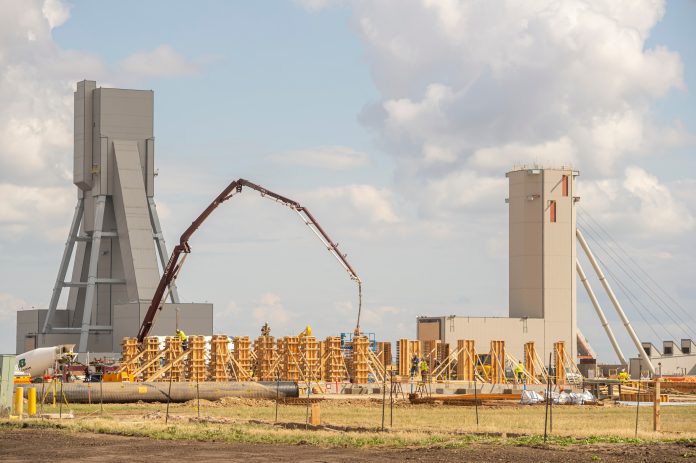
Jansen Stage 1 is 32% complete and moving along as planned. The first production from Jansen Stage 1 is scheduled in late CY2026. Jansen Stage 2 construction is scheduled to take roughly six years, with the first production in FY2029, followed by a three-year ramp-up period.
Jansen Stage 2 is set to produce 4.36 Mtpa at a lower capital intensity than Jansen Stage 1, using existing and planned infrastructure. BHP approved an initial funding commitment of $188 million in October 2022 for long-lead equipment procurement and process plant foundation works. The additional $4.9 billion investment will be used for additional mining districts, second shaft hoist infrastructure, processing facility expansion, and rail car addition.
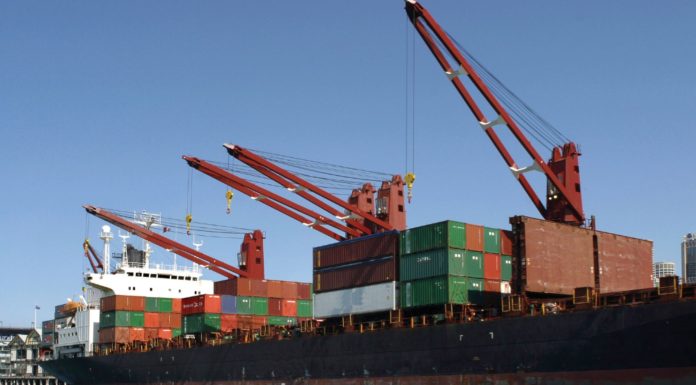
BHP’s Westshore Terminals in Delta, British Columbia, remains the main port for shipping potash from Jansen to customers. The Jansen Stage 2 investment includes funding for increased storage facilities, but BHP will not initiate a formal capacity extension until Jansen Stage 2 reaches first production.
Jansen, a potash mine in Saskatchewan, is designed for social value and sustainability, with a 50% reduction in greenhouse gas emissions per tonne and a 60% reduction in freshwater usage compared to the average potash mine. The company has increased Indigenous employee representation to 9%, with a target of 20%, and aims to maintain a gender-balanced workforce.
BHP’s Capital Allocation Framework evaluated Jansen Stage 2, revealing an internal rate of return of 15%-18% and a payback period of six years from the first production. EBITDA margins for Stages 1 and 2 are expected to be 65%-70% due to a low-cost position of US$105-120/t4.
Transitioning to Jansen Stage 2 during the construction of Jansen Stage 1 will provide operational benefits such as leveraging the integrated Jansen project team, using existing contractors, reducing overheads, and saving on mobilisation and demobilisation costs, with potential synergies of US$0.3 billion.
Jansen has the potential for two further expansions, potentially reaching an ultimate production capacity of 16 to 17 Mtpa, subject to studies and approvals.