

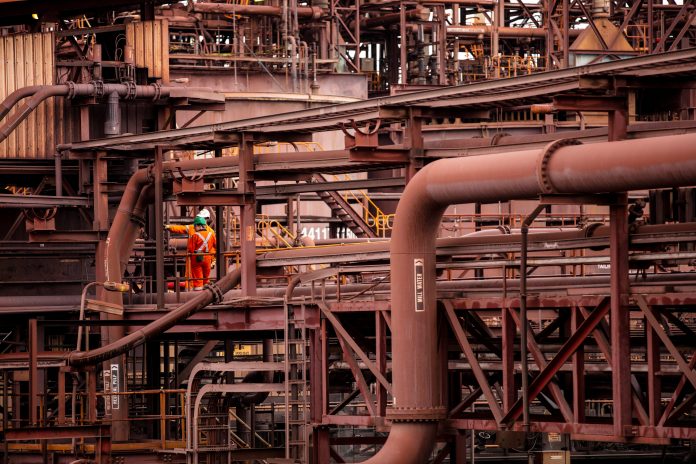
BHP has introduced a fully electric Jumbo at Olympic Dam to help BHP meet its goal of reducing operational greenhouse gas (GHG) emissions, including reducing dependency on diesel.
The 28.7-tonne, 14.5-metre-long battery-electric Epiroc Boomer M2 “Jumbo” will be powered by a 150kW traction motor and 150kW battery pack, eliminating diesel-related GHG emissions. During the 12-month trial period, it will be examined for efficiency, productivity, and comfort.
Jumbos are employed in developing underground mines to drill holes later filled with explosives to create new spaces. To stabilise mine walls after blasting, Jumbos put in big bolts. At Olympic Dam, 16 Epiroc Jumbos are currently in use by BHP.
By minimising vibration and noise and doing away with heat and diesel particle emissions, the fully-electric Jumbo will also set new standards for passenger comfort.
Olympic Dam Mine General Manager Andrew Harris said the world would require a lot more of South Australia‘s high-quality copper, and the Olympic Dam team is behind BHP’s efforts to produce that copper more responsibly.
“Collaboration with supply partners like Epiroc will be critical to developing the technology required to reduce emissions, while ensuring we continue to improve the safety and productivity of our operations. I can’t wait to see what this new fully-electric Jumbo can do,” Harris stated.
According to BHP Group Procurement Officer James Agar, the fully electric Jumbo is yet another innovation that will help BHP meet its medium-term goal of decreasing operational greenhouse gas emissions by 30 per cent by FY2030.
Alisa Bennett, Underground Business Manager for Epiroc Australia and Mongolia said: “Epiroc are excited to partner with BHP in a new era of electrification in Australia. Epiroc’s ambitious sustainability targets like halved carbon emissions by 2030 matches BHP’s sustainability agenda well. The Boomer M2 Battery rig will facilitate a healthier and safer underground working environment for our customers without compromising on productivity.”
BHP has set a medium-term goal of reducing operating GHG emissions by at least 30 per cent by FY2030, compared to an FY2020 baseline. Diesel-powered vehicles accounted for approximately 40 per cent of BHP’s operational emissions in its FY2020 baseline year.
The Jumbo trial also contributes to BHP’s efforts to reduce the operational impact of diesel particulate matter in underground mining operations by 2025 as part of the International Council on Mining and Metals’ Innovation for Cleaner, Safer Vehicles initiative.
The completely electric Jumbo trial builds on work to develop electric vehicles at Nickel West in Western Australia, Olympic Dam in South Australia, and BMA’s Broadmeadow mine in Queensland. BHP is also working with Caterpillar Inc. and Komatsu to produce zero-emissions electrified haul trucks and Wabtec Corporation and Progress Rail to build battery-electric locomotives.
BHP has also inked Power Purchase Agreements in Chile, Queensland, South Australia (with Iberdrola and Neoen), and Western Australia to source renewable energy for several of its sites. BHP also has client decarbonisation partnerships with world-leading steelmakers in China, Japan, Korea, India, and Europe, representing around 17 per cent of reported worldwide steel production capacity.








 emissions, including reducing dependency on diesel.)