
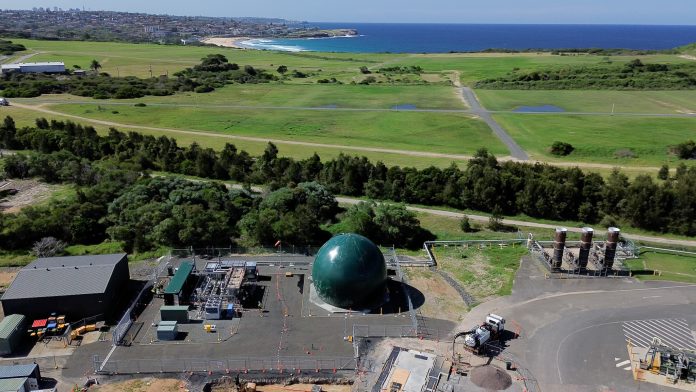
In an Australian first, Jemena announced that biomethane created from wastewater is now being pumped straight into the NSW gas distribution network.
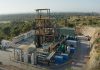
The Malabar Biomethane Demonstration Project, co-funded by the Australian Renewable Energy Agency (ARENA) and Jemena, produces biomethane by upgrading biogas obtained from organic waste. The project, a collaboration with Sydney Water, is housed in the Malabar Wastewater Resource Recovery Plant.
The project’s next phase, which is scheduled to begin by the end of June, will see the plant scale up biomethane production to an initial capacity of 95 terajoules of renewable gas per year.
“We know when you use biomethane for cooking and heating it is helping to lower Australia’s overall carbon emissions,” Jemena Managing Director Frank Tudor said.
“This is a potential game-changer for Australian energy users as biomethane is completely compatible with existing gas appliances and can be used in those manufacturing processes which currently rely on gas for heat,” Tudor stated.
According to Tudor, biomethane is created in two steps. First, biogas is created by the anaerobic digestion process, in which bacteria break down organic wastes in wastewater. The biogas is then purified of pollutants and impurities to produce biomethane.
Sydney Water Managing Director Roch Cheroux stated that the pilot is an example of how Sydney Water is reacting to the changing requirements of its communities today and in the future.
“Sydney Water identified an opportunity to maximise the value of waste we produce, and by partnering with Jemena, we are now able to play a significant role in helping thousands of Sydney homes and businesses increase their efficiency and sustainability. For the first time, it will be possible to use a mix of biomethane and natural gas for cooking, heating, and hot water,” Cheroux said.
According to Cheroux, gas will be redirected into the supply network from this point forward, allowing the facility to convert waste into a new renewable energy source. In the future, biomethane might power NSW companies relying on gas for day-to-day operations while attempting to decarbonise their supply chains.
“This Australian first trial is expected to produce the same amount of gas used by approximately 6,300 homes each year, and this is just the start. If we work together across industries, we can ultimately create a better life for all our customers by delivering reliable and renewable gas and helping reduce households’ carbon footprint,” Cheroux said.
Jemena’s research has found enough potential biomethane sources in NSW alone – wastewater facilities, landfill, culinary, agricultural, and crop waste – to create around 30 petajoules per year. This is enough gas to supply all of Jemena’s present residential customers in NSW.
Tudor said, “By developing biomethane production and other renewable gases such as green hydrogen (produced using renewable electricity) we’re taking steps towards decarbonising our gas networks in pursuit of net-zero emissions.”
Tudor explained that Frontier Economics’ modelling, finished in February 2021, discovered that this strategy would save customers between $5 billion and $7.5 billion per year in system expenses compared to the cost of complete electrification.
“To support the development of a Renewable Gas sector, we’re continuing to call for policymakers to consider establishing a Renewable Gas Target which would spur the production of renewable gas helping Australia achieve its emissions reduction goals,” Tudor stated.
ARENA CEO Dareen Miller commented, “ARENA is excited to see the completion of Jemena and Sydney Water’s first-of-a-kind project in Australia, highlighting the potential to capture and upgrade biomethane from wastewater for use in the natural gas network.”
Origin Energy has agreed with Jemena for the biomethane produced at the Malabar facility and will provide the renewable gas to customers.
The project’s biomethane will be the first to be evaluated under a prototype Greenpower renewable gas accreditation scheme.