
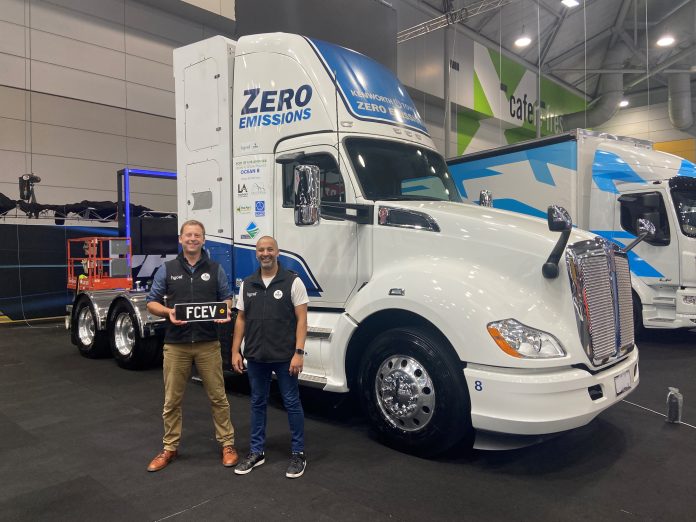
Hycel, Deakin University‘s hydrogen program, and PACCAR Australia will use Australia’s first hydrogen prime mover to create zero-emissions solutions for the domestic heavy haulage industry, on show at the Brisbane Truck Show this week (18–21 May).
The truck is one of ten prototype Kenworth T680 Fuel Cell Electric Vehicles (FCEVs) that will take part in the world-first operational testing in the Port of Los Angeles in 2022. It serves as the focal point of Hycel’s hydrogen mobility program, with an initial emphasis on the performance characteristics of a heavy vehicle hydrogen fuel cell powertrain.
Deakin’s Hycel Deputy Research Director Associate Professor Michael Pereira described the opportunity to work with one of the world’s most advanced hydrogen vehicles as “unique.”
“Deakin specialises in industry-led research collaborations. Partnering with PACCAR Australia means our team has direct, hands-on access to the T680 to familiarise ourselves with its operability. This hardware is critical to complementing our laboratory work,” Associate Professor Pereira said.
Hycel will first examine data from the US pilot program to better understand how essential components of a hydrogen fuel cell powertrain function and respond to operational needs.
“From here, we are developing state-of-the-art computer simulation models to predict the hydrogen fuel cell system and powertrain demands for Australia’s unique freight haulage conditions,” Associate Professor Pereira stated.
“Specifically, we’re addressing the Australian transport sector’s demands to deliver more payload per truck over longer distances, when compared to other places in the world,” Associate Professor Pereira explained.
Deakin’s Waurn Ponds site has commenced the research, which will continue in the future at the $24 million Hycel Technology Hub, a unique hydrogen research, demonstration, and training facility presently under development on Deakin’s Warrnambool campus (scheduled for completion in November 2023).
With the heavy transport sector now accounting for an estimated 2% of Australia’s carbon emissions, Deakin said the Hycel program leverages the university’s unique engineering, materials, analytics, and information technology skills to help the industry shift from diesel to zero-emissions hydrogen solutions.
In addition to the mobility theme, Hycel collaborates with industry on new training and education programs for the growing hydrogen workforce, as well as social licence to help raise knowledge and acceptance of hydrogen’s role in Australia’s clean energy transition.
Deakin’s Deputy Vice Chancellor Research Professor Julie Owens stated that Deakin was integrating research capabilities in science, technology, and education to fulfil the demands of Australia’s developing hydrogen sector.
“Decarbonising Australia’s heavy vehicle transport is a vital step toward reducing emissions and achieving reduction targets. As research and innovation partner to businesses like PACCAR Australia, we are thrilled to advance uptake of hydrogen in our nation’s clean energy future,” Professor Owens said.