
Everest Metals Corporation Limited (EMC) and Edith Cowan University (ECU) have executed a Memorandum of Understanding to progress Direct Rubidium extraction from the Mt Edon LCT Project in Western Australia.
The MOU permits 36-month collaborative activities at ECU’s Mineral Recovery Research Centre (MRRC) for Direct Rubidium Extraction, involving advanced processes like ion exchange. The process includes purification, refining, and conversion into a final product like Rubidium slat and metal. EMC will own any intellectual property rights derived from the project.
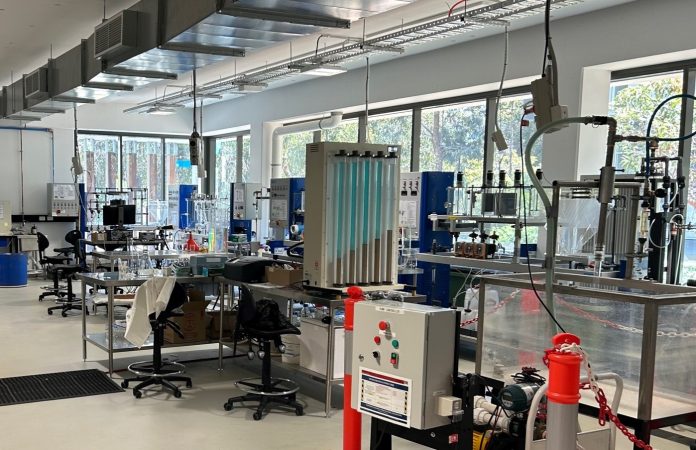
“EMC’s high grade intersections of the critical mineral Rubidium has led to rapid assessment of processing options. EMC is very excited to team up with the very experienced team at ECU’s Mineral Recovery Research Centre to explore the extraction of Rubidium at its Mt Edon project. EMC’s management is very impressed with the substantial laboratory assets available to the team at the research centre it visited in recent weeks. The EMC geological team will work through next steps of resource development in coming months. Grade is the key and grade is what we have,” EMC Chief Operating Officer Simon Phillips said.
MRRC is a leading resource recovery centre in Western Australia, focusing on efficient mineral processing and recovery technologies, reducing carbon and water footprints, and developing waste-to-value strategies. Its unique role in Western Australia is due to its vision, staff capabilities, and ability to address challenges in mineral processing, brine mining, process decarbonisation, mineral carbonation, battery supply chain downstream, and greener waste recycling.
The most recent US Government Geological Survey of 2023 recognised rubidium as a Critical Mineral. According to EMC, rubidium’s potential applications across various high-tech and traditional industries are rapidly expanding.
Rubidium is frequently associated with the mineralisation of caesium and lithium, and its derivatives are utilised in biomedical research, electronics, specialty glass, pyrotechnics, and military-industrial uses. Because it is easily ionised, researchers predict it will be utilised as a propellant in spacecraft ion engines.