

This year’s International Minerals and Resources Conference (IMARC) will focus on supply restrictions, the realities of moving towards a decarbonised and electrified energy supply and consumption, and the inconceivably high demand curves for critical minerals.
Partners in Performance and former Minerals Council of Australia CEO Mitchell H Hooke AM will chair a Session on the first day addressing the mining and resources industry’s worldwide challenges and possibilities.
Hooke anticipates that the conference will discuss thoroughly the issues of harmonising growth imperatives and commitments to reduce greenhouse gas emissions with practical feasibility.
“The mining industry has been on a sustainable development path since the turn of the century, long before Wall Street discovered ESG. However, right now companies are grappling with the dual imperatives of achieving 2030 emissions reduction targets, and growing mineral supply accounting for the practical realities of today’s technologies and operating constraints, and tomorrow’s possibilities,” Hooke stated.
Hooke explained Partners in Performance is right on top of this and that the organisation is working with firms that are making significant progress in decreasing Scope 1 and 2 emissions while preparing for the comparably more difficult issue of reducing Scope 3 emissions across the entire value chain.
“Companies and their representative organisations are fully aware of the extent of current supply constraints, and what’s needed to remedy them on a sustainable footing. This is what economists are calling ‘supply inelasticity to growing demand,” Hooke added.
According to Hooke, it is a complicated set of conflicting issues, all of which I expect to be thoroughly investigated at IMARC, in collaboration with industry executives, state and federal ministers, regulators, and visiting international delegations.
Hooke said, “among the critical topics to be discussed at this international event, I expect the focus to be:
- Incentive prices are still below the ‘risk reward’ equation needed to spur new greenfields projects. This is exacerbated by inflation, eroding confidence in net present value and internal rate of return calculations, and payback estimates.
- Access to capital is still tight for startups – equity markets’ antipathy toward the mining sector remains a legacy factor. ASX companies trading at EBITDA multiples are well south of comparable industrial companies and IT stocks.
- Skills shortages across the board, including sectors such as mining and supporting equipment, technology and services providers, and infrastructure.
- Regulatory requirements to permit exploration and mining remain cumbersome, notwithstanding the industry’s commitment to high environmental and social impact standards.
- Social license to operate in local communities is increasingly important to earn, and maintain.
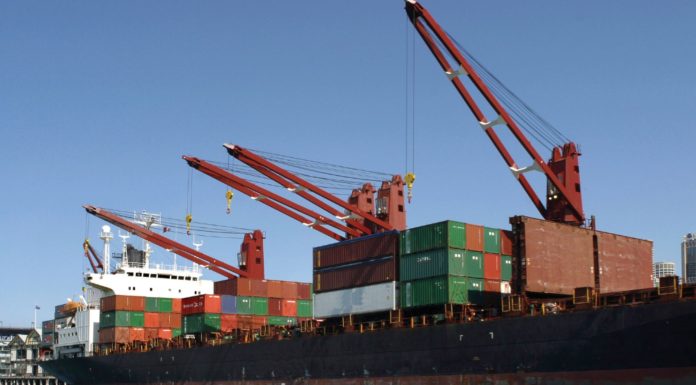
- Critical minerals supply chain logistics – pertaining to the mining industry’s supply of raw materials, but also the processed product supply chain of critical minerals, and the integration and diversification of this. The latter of which is vital to the decarbonisation, and electrification, of energy supply and use.
- Innovative technologies which transcend the traditional disciplines of engineering, metallurgy and earth resources, such as machine learning, AI, automation and robotics as well as descriptive, real time and predictive data analytics. These digital technologies are rapidly evolving.”
He stated that the minerals sector is well aware of its environmental stewardship duties, and now is a crucial time to concentrate on commitments, advancement, capacity limitations, and technological and operational innovation in that regard.








 will focus on supply restrictions, the realities of moving towards a decarbonised and electrified energy supply and consumption, and the inconceivably high demand curves for critical minerals.)