
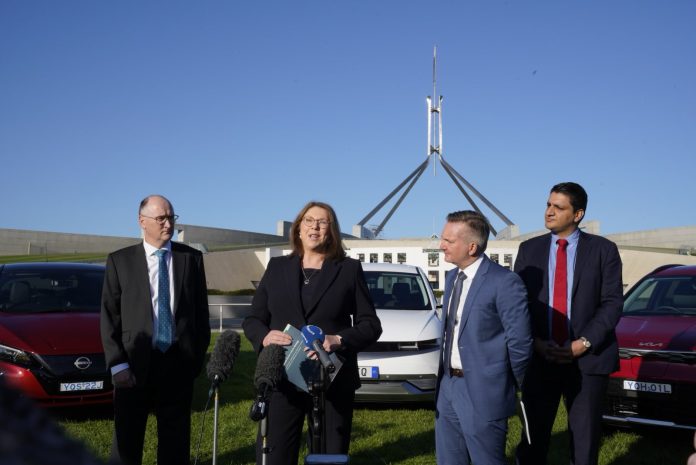
The Australian Government has released the first National Electric Vehicle Strategy, a roadmap ensuring Australians have a better choice of electric vehicles and encouraging greater usage of cleaner, cheaper vehicles.
The Federal Government will adopt a Fuel Efficiency Standard as part of the Strategy, following public consultation, and will work with industry and the community to iron out more details in the coming months.
Fuel efficiency standards specify how much pollution, mainly carbon dioxide, a car emits when running.
More efficient vehicles emit fewer emissions, lowering their environmental effect and making them cheaper to run.
Only Australia and Russia are among the developed countries that do not have fuel efficiency standards.
According to the Federal Government, due to the lack of a standard, Australian households and businesses are missing out on a wider range of car models and paying more for fuel since manufacturers prefer sending more efficient vehicles to countries with standards in place.
New vehicles in Australia consume 40% more fuel than those in the European Union, 20% more than those in the United States, and 15% more than in New Zealand.
The Government reported that previous research has found that implementing a fuel efficiency standard may save motorists $519 per year on fuel expenditures.
With passenger cars accounting for nearly 10% of Australia’s CO2 emissions, the Albanese Government said this is vital to meeting the country’s emissions reduction targets.
Fuel efficiency standards will apply only to new vehicles and not retrospectively, allowing people to choose the vehicle they wish to drive.
The National Electric Vehicle Strategy also considers lowering barriers to electric vehicle adoption, such as demand, supply, and infrastructure, which is crucial planning that consumers have been requesting.
According to the Government, the transport industry is Australia’s third largest source of emissions. The Government added that the National Electric Vehicle Strategy will help reduce carbon emissions by at least 3 million tonnes by 2030 and by more than 10 million tonnes by 2035.
Minister for Climate Change and Energy Chris Bowen stated that Australian governments, vehicle manufacturers, driving clubs, climate groups, corporations, and unions were all on board with bringing cleaner and cheaper cars to Australia.
“This strategy delivers on our commitment to provide greater choice for Australians to drive cars that are cleaner and cheaper to run,” Minister Bowen said.
Minister for Infrastructure, Transport, Regional Development and Local Government Catherine King stated that the government would implement fuel efficiency standards that are appropriate for the Australian market.
“This strategy offers an historic opportunity to develop fuel efficiency standards that learn from international best practice, while recognising the unique needs of Australians,” Minister King said.
Minister King added, “It will send a strong message to the global car industry that when it comes to transport technology, Australia will no longer settle for less. More than 85 percent of all cars sold in the world are subject to fuel efficiency standards. It’s time Australians were offered the same choice.”