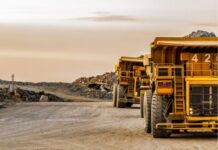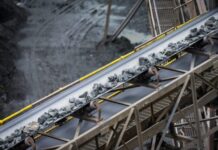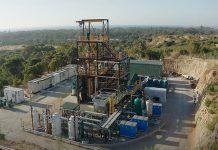

Fortescue‘s track record of completing complex projects continues, marking the first ore feed into the processing facility at its Iron Bridge Magnetite project in the Pilbara.
In a statement, Fortescue said Iron Bridge will see the world’s fourth largest iron ore miner offer an expanded product variety and create 900 new jobs, with initial production expected in the March 2023 quarter.
Significantly, it might become one of Fortescue’s first fossil fuel-free facilities, thanks to the recently announced world-leading US$6.2 billion decarbonisation commitment to achieve true zero Scope 1 and 2 emissions by 2030.
Fortescue’s Executive Chairman, Dr Andrew Forrest AO, was joined at an event at Iron Bridge by Chief Operating Officer Iron Ore, Dino Otranto, Fortescue Board members Elizabeth Gaines and Penny Bingham-Hall, representatives from joint venture partner Formosa, West Australian Deputy Premier and Minister for State Development Roger Cook, and Company executives, valued partners, and suppliers.
Traditional Custodians were also there to welcome approximately 100 guests to Nyamal land.
Iron Bridge, located 145 kilometres south of Port Hedland, will produce 22 million tonnes of 67 per cent Fe magnetite concentrate per year. This product allows Fortescue to access the high iron ore grade market sector, increasing annual production and shipping capacity while also delivering an increased product range.
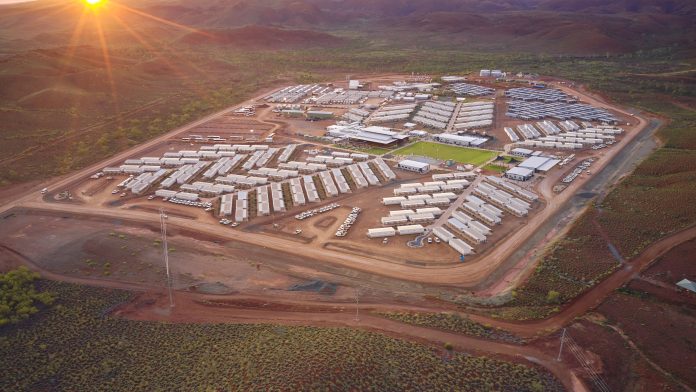
Since the investment decision in April 2019, over 12.8 million work hours have culminated in the design and construction of the mine, pipelines, village, and infrastructure at Iron Bridge, supporting over 3,000 jobs, with an additional 900 full-time jobs to be created when the project begins operations. There are now 3,470 individuals working on the Ore Processing Facility (OPF) and pipelines area of work.
Dr Forrest said Fortescue takes pride in constantly delivering on its promises, and Iron Bridge is no exception. Dr Forrest stated that Iron Bridge would lead the way for magnetite operations in Western Australia, building on Fortescue’s track record of developing and operating iron ore mines in the Pilbara safely and successfully.
“This project demonstrates Fortescue’s commitment to our strategic pillars of investing in the long-term sustainability of our iron ore business, investing in growth, maintaining balance sheet strength, as well, as delivering strong returns to our shareholders,” Dr Forrest added.
Dr Forrest said: “As we transition to a global green energy, technology and resources company, Iron Bridge is an obvious choice to be considered as one of our first decarbonised, fossil fuel-free sites, as we deliver on our target to achieve real zero Scope 1 and 2 emissions by 2030.”
According to Otranto, the Iron Bridge high-grade magnetite product is a big differentiator for Fortescue, further expressing his delight with the progress made to reach the first ore feed into the processing facility, managed by the highly experienced project team.
“This is a project that has been delivered during a challenging environment, and despite a global pandemic, rising inflationary pressures and a tight labour market, the Fortescue Values have risen to the forefront and demonstrated our ability to continue delivering this ground-breaking project,” Otranto said.
Minister Cook congratulated Fortescue on achieving its milestone.
“The Iron Bridge project is going to create hundreds of jobs and make a significant contribution to the WA economy,” Minister Cook stated.
The Iron Bridge ore deposits’ characteristics and Fortescue’s novel usage of a dry crushing and grinding circuit contribute to the project’s operating efficiency in terms of energy, water use, and cost.
Fortescue’s investment in the Pilbara Energy Connect project, which includes energy transmission line infrastructure, solar gas hybrid generating, and an accompanying battery storage solution will bring low-cost power to Iron Bridge.