
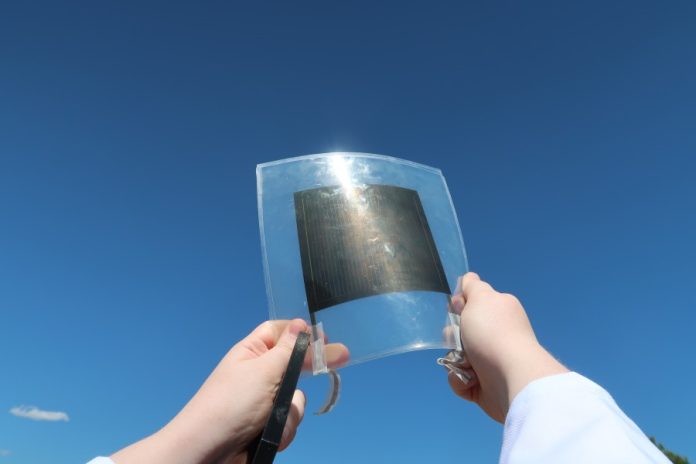
First Graphene Limited, Halocell Energy, and Queensland University of Technology (QUT) have secured a $2 million Australian Government’s Cooperative Research Centres Project (CRC-P) grant for their ultra-low-cost perovskite solar cell project.
The project intends to commercialise ultra-low-cost, flexible perovskite solar cell fabrication at Halocell’s Wagga Wagga plant using the roll-to-roll (R2R) production process.
“Our collaboration with Halocell Energy and QUT will help develop new materials and processing technology for high performance perovskite solar cells, opening the door for high-tech commercial materials and manufacturing of cell components in Australia,” First Graphene Managing Director and CEO Michael Bell said.
According to the Company, scalable fabrication is expected to contribute to the 31% compound annual growth rate in the perovskite solar cell market, valued at US$7.38 billion by 2030.
Among the primary project deliverables will be First Graphene’s development of low-cost graphene-based electrode replacements for high-cost conductor materials utilised in cell production, such as gold and silver.
“Validation of these graphene-based materials will help build a strong business case for full-scale commercial production of both perovskite cells and the materials needed to make them in large volumes,” Bell stated.
The Company explained that carbon-based cells outperform traditional silicon cells in low and artificial light conditions, including indoor environments, for niche power generation and supply.
Halocell Energy has already used graphene successfully in their perovskite cells, increasing efficiency by 38% and lowering production costs by more than 83%.
“Thin Film Solar technology is the future of ultra low-cost manufacturing in Australia, as recognised by Federal Government’s critical technologies list,” Halocell Energy CEO Paul Moonie said.
First Graphene’s focus in the project will be on the research, development, and provision of graphene formulations to generate the material ink utilised in producing perovskite solar cells with adequate dispersion, low toxicity, and high conductivity properties.