

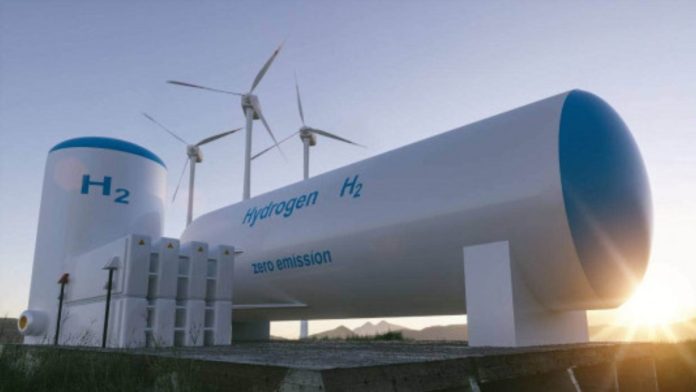
With the support of Ng?i Tahu, Meridian has chosen Woodside Energy as the preferred partner to advance the development stage of the proposed Southern Green Hydrogen (SGH) project in New Zealand.
Woodside was chosen following a lengthy competitive bidding process based on its operational capability and experience, as well as its process safety and liquids marketing expertise.
“We’re very pleased to be partnering with Woodside which, like us, is focussed on progressing a world-class hydrogen and ammonia facility in Southland, New Zealand, that will provide significant benefits to the local community. In addition to its operational and marketing expertise, Woodside has demonstrated climate change ambitions, and as we are a 100 percent renewable energy company and committed to sustainability, that was a key focus for us in selecting a partner,” Meridian Chief Executive Neal Barclay said.
Mitsui & Co., Ltd. (Mitsui) is also in talks to join the project and develop the potential ammonia offtake market, with the goal of developing a world-class collaboration that includes the entire hydrogen and ammonia supply chain. Mitsui has been in the ammonia business for 50 years and has the highest proportion of ammonia imports into Japan.
Meridian, Woodside, and Mitsui will begin front-end engineering design for the project once commercial arrangements are finalised.
Woodside CEO Meg O’Neill said: “We are pleased to have been selected as the preferred partner for the proposed SGH project. Woodside brings the technical skill and operations experience to develop this project at pace to meet customer demand for hydrogen, which we expect to grow in the energy transition. We look forward to working with Meridian and Mitsui to potentially offer this important customer solution both domestically and globally.”
Mitsui Chief Operating Officer of Energy Solutions Business Unit Toru Iijima stated that Mitsui is looking forward to working with Meridian, Woodside, and other key players to establish a large-scale hydrogen and ammonia export project that would benefit Southland, New Zealand, and the worldwide market.
Woodside was chosen after a competitive process in which Murihiku Regeneration, representing both Ngi Tahu and the local rnanga of Murihiku, was heavily involved. In the future, Meridian, Woodside, and Mitsui will actively collaborate with Ngi Tahu and the local Rnanga to ensure the project corresponds with their energy strategy for the region and promotes their mana whenua principles.
We believe a large-scale hydrogen and ammonia facility in Southland, focused on the export market, will accelerate the development of a domestic hydrogen economy and strengthen New Zealand’s platform to contributing to decarbonising our transport and industrial sectors,” Barclay said.
Barclay stated that it would also provide new opportunities for the local community in an emerging industry. Barclay added that Mitsui anticipate that the plant will be able to meet up to 40 per cent of New Zealand’s dry year flexibility demands in the electricity industry.
Ta Tipene O’Regan, Murihiku Upoko, and Ngi Tahu Leader welcomed the announcement of Woodside as the selected partner, and look forwards to expanding the connection between Te Rnanga o Ngi Tahu and Murihiku Hap and Woodside.
“Our interest in the project is more than just commercial. It extends to the longterm social and environmental sustainability of the rohe. Future developments show great promise for the region, but they must also meet the highest standards and deliver real value to the community,” he said.
Terry Nicholas, Murihiku Upoko and Murihiku Regeneration Director added: “This is an opportunity for Murihiku and the wider Southland region to develop a new, highly skilled energy economy. While it brings many benefits, there are significant education and training challenges to ensure our whanau are able to fully participate in this transition, and we need to accelerate the work we are already doing in that space to meet the project’s projected labour needs.”
The proposed facility aims to manufacture 500,000 tonnes of ammonia per year through electrolysis using renewable energy. Technical development on the facility is underway in tandem with the design of the project’s commercial framework. Options for supplying hydrogen and ammonia to the domestic market, as well as the possibility for ammonia export to Asia and Europe, will be evaluated.
Meridian and Contact were the first members of SGH. Contact has decided not to continue as a development partner in the next phase of the project, but has expressed interest in continuing to support the project as a possible electricity supplier.









 project in New Zealand.)