
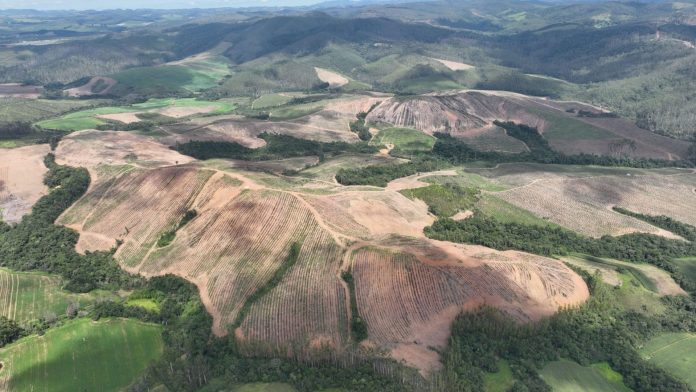
Meteoric Resources NL has issued an update on its investigation activities into the uranium and thorium levels at the Caldeira Rare Earth Project in Brazil.
The company conducted a complete analysis of all previous exploration data and saw that the project’s average uranium and thorium values are at 17 ppm and 64 ppm respectively.
It noted that the levels of uranium and thorium at the project are very low, with values that are typically lower than most other ionic clay rare earth element (REE) deposits and are significantly lower than that of hard rock rare earth projects.
The dominant REE mineral seen in the source rock beneath the clay zone is bastnaesite, which is known to have lower levels of uranium and thorium than other common REE minerals such as monazite or xenotime.
Bastnaesite has been recognised as the main REE carbonate associated with the Pocos de Caldas Alkaline Complex.
Using the optimised leach conditions from the initial metallurgical test work conducted in 2019, four larger-scale leaching tests were conducted to generate sufficient leach liquor to recover REE carbonates by precipitation.
The test work was preliminary in nature and was designed to trial several variables and their effects on REE recoveries.
“The levels of uranium and thorium in the REE enriched clays of the Caldeira Project are very low and there appears to be no preferential enrichment of radionuclides into the REE carbonate in the preliminary metallurgical test work,” Meteoric Resources Executive Chairman Andrew Tunks said.
He added that due to the fundamental physical and chemical properties of true ionic clay REE deposits, the most common radioactive contaminants are typically not absorbed into the clays during the weathering process.
“This is another great outcome for Meteoric at Caldeira and shows we have an amazing project in our hands which continues to excite as we approach finalising our maiden resource estimate,” Tunks noted.