
A new CSIRO and GHD Advisory report released today highlights the importance of prioritising hydrogen-powered transport alongside electric vehicles in Australia to avoid lagging behind other nations.
While battery electric vehicles are expected to decarbonise road transport in Australia, the CSIRO noted that hydrogen-powered transport could significantly contribute to long-haul travel and freight transport due to their quicker refuelling, longer range, and ability to maximise payload without the need for heavy batteries required by electric vehicles.
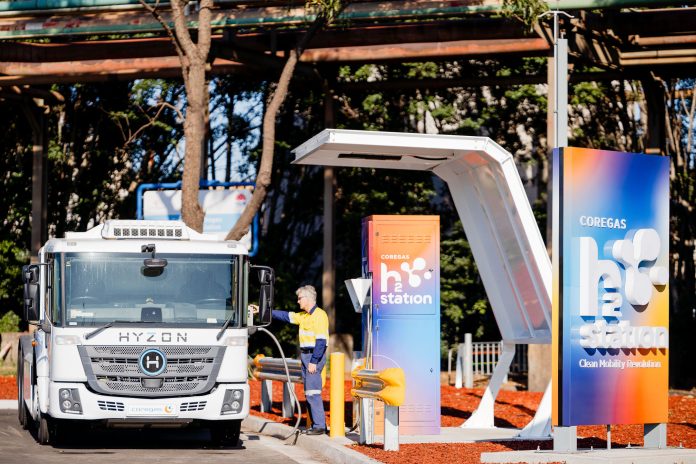
The ‘Hydrogen vehicle refuelling infrastructure’ report outlines the prospects and challenges for establishing hydrogen-powered road vehicle refuelling stations in Australia.
CSIRO chief scientist Prof Bronwyn Fox stated that if Australia is to reach its net zero commitments, it must immediately decarbonise the transport sector, which now accounts for 18.6% of the country’s greenhouse gas emissions.
“While we know hydrogen will play a critical role, we also know that much of the key infrastructure for storing, moving and distributing hydrogen for use as a transport fuel — including pipelines, storage tanks and refuelling stations — is yet to be built,” Prof Fox said.
“That’s why this report is so important. It identifies priorities for action, including areas that would benefit from targeted research and innovation,” Prof Fox added.
The report assessed the various hydrogen storage and dispensing solutions, as well as refuelling infrastructure options depending on fuel demand and distance from the hydrogen source.
It discovered that while all Australian hydrogen refuelling stations now feature onsite hydrogen production to refuel vehicles at scale, there’s a need to transition to centralised offsite hydrogen production and delivery.
According to GHD Advisory Executive Advisor and lead author of the report Shawn Wolfe, there are currently only five hydrogen refuelling stations in Australia, with another 20 planned or under development.
“The pace of the transition to hydrogen-powered transport is moving a lot faster internationally than in Australia,” Wolfe said.
“We need to get into lockstep or risk being left behind,” Wolfe added.
CSIRO’s Hydrogen Industry Mission leader Dr Patrick Hartley stated that research is taking place at every stage of the hydrogen supply chain, from hydrogen generation through storage, delivery, and eventually, utilisation technologies such as fuel cells.
“Australia is unique in terms of our size and sparse distribution of population, so finding ways to make hydrogen available across the continent will be a key enabler,” Dr Hartley said.
“This report will help regulators and industry stakeholders understand where they can best focus their activities and progress their plans to develop infrastructure for hydrogen-powered transport,” he continued.