
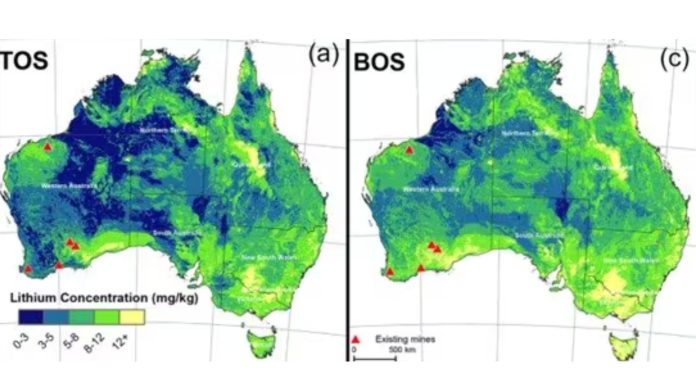
A University of Sydney-led research, in collaboration with Geoscience Australia, has identified the concentration and distribution of lithium in Australian soil, providing crucial information for identifying potential reserves.
The majority of Australia’s lithium explorations have taken place in Western Australia, but the research shows the possibility of other regions, including Queensland, New South Wales, and Victoria, that have high anticipated lithium densities.
“Our research not only opens up new possibilities for Australia’s lithium industry but could also advance our path towards a low-carbon economy, a critical step in curbing greenhouse gas emissions,” School of Life and Environmental Sciences Postdoctoral Research Fellow in Soil Security and the research’s lead author Dr Watini Ng said.
Professor Budiman Minasny, senior research author and a top international soil mapping and modelling expert, stated that the findings could have substantial implications for Australia’s lithium industry.
“We’ve developed the first map of lithium in Australian soils which identifies areas with elevated concentrations,” Professor Minasny said.
“The map agrees with existing mines and highlights areas that can be potential future lithium sources,” he added.
According to the study, the highest lithium concentrations are found in the Mount Marion deposit in Western Australia, with elevated amounts reported throughout the central western region of Queensland, southern New South Wales, and sections of Victoria.
The researchers employed computerised soil mapping tools developed at the University of Sydney to determine the amount of extractable lithium in soil samples gathered around Australia.
The University said the study provides a detailed picture of lithium distribution across the continent, which is influenced by a range of environmental factors such as climate, geology, and vegetation.